
"Survey on foreign visitors to Japan and Japan" - With the increase in foreign visitors to Japan, how are Japanese people's attitudes changing? 40% "want to learn a foreign language" and 30% "have become interested in Japan"
2018.05.18
Press Releases
Culture Convenience Club Co., Ltd.
Culture Convenience Club Co., Ltd. is pleased to announce that it has conducted a "Survey on Foreign Visitors to Japan and Japan" using the online "T Survey" to survey 1,504 men and women aged 18 to 69 who use T Cards.
Digest of a survey about foreign visitors to Japan and Japan
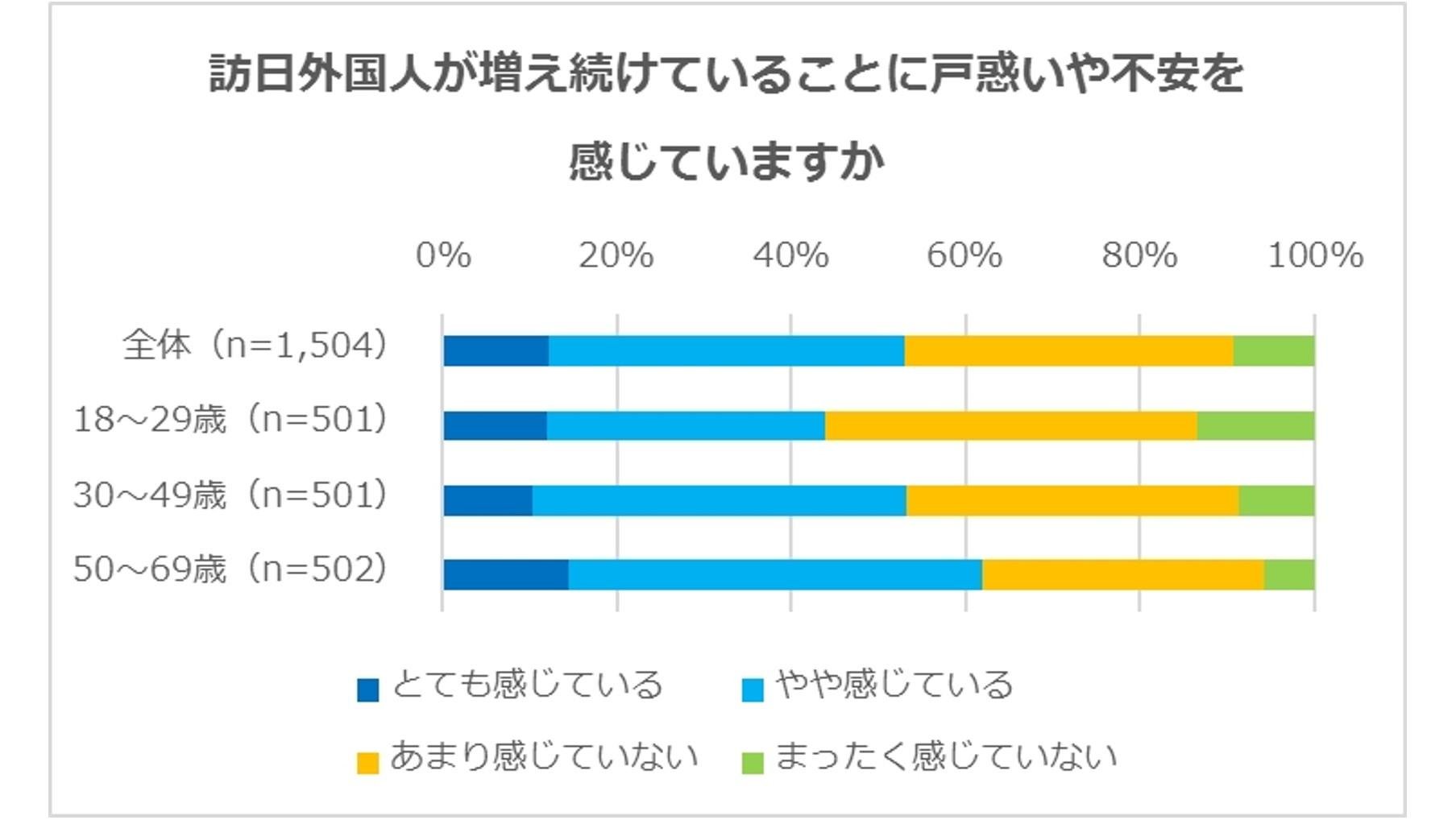
50% feel confused or anxious about the increase in foreign visitors to Japan
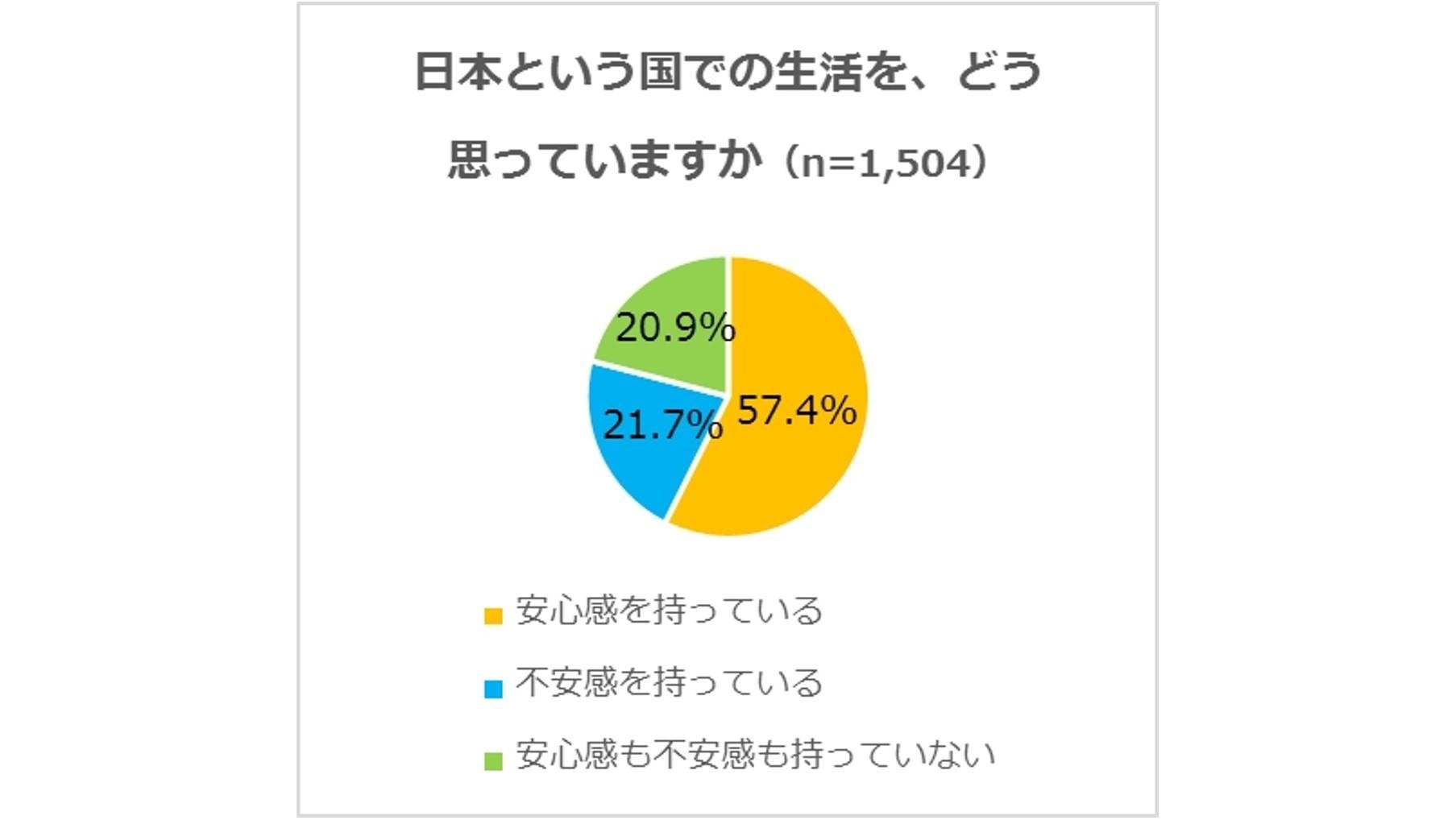
60% feel a sense of security living in Japan
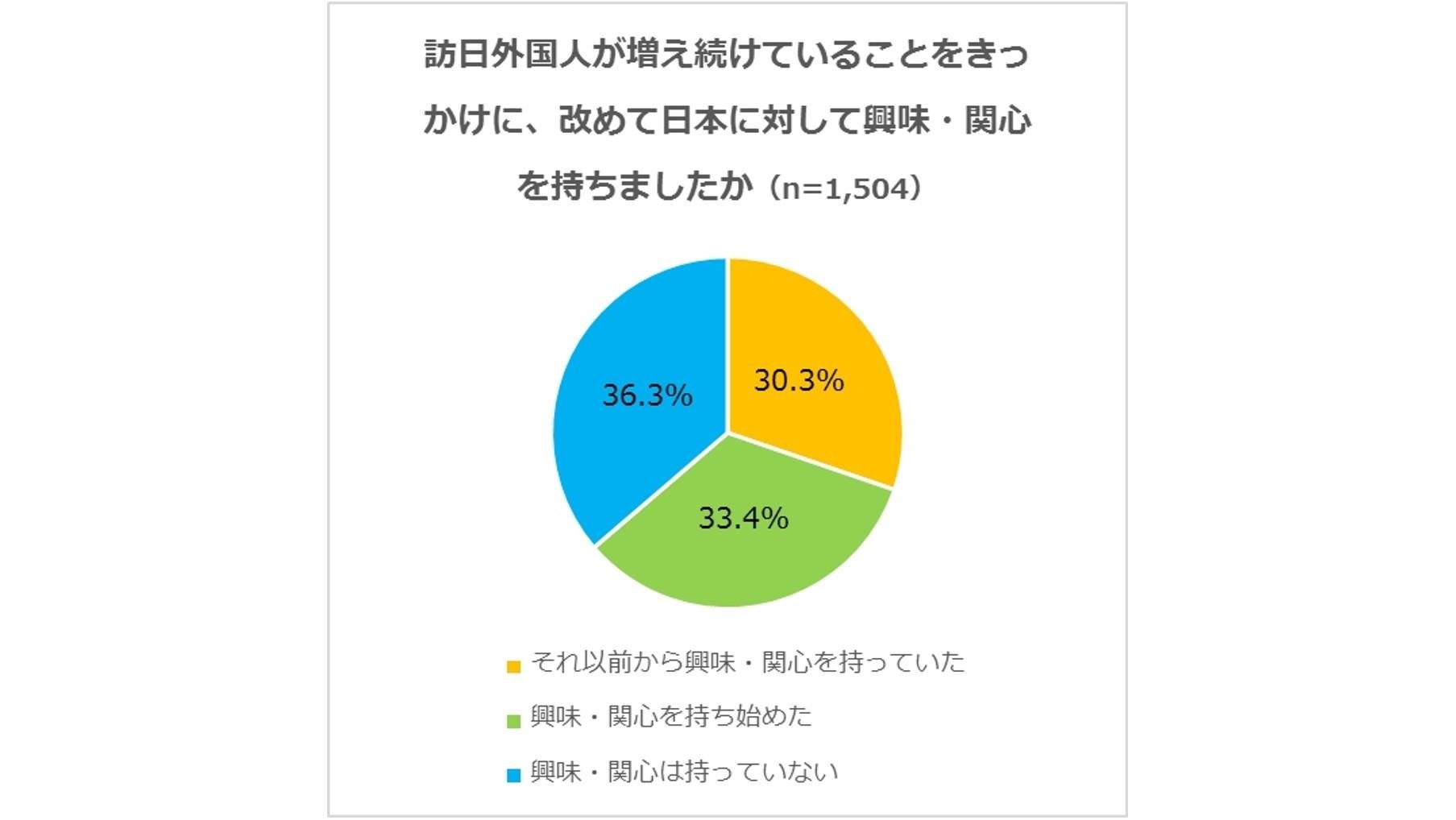
30% of people have become interested in Japan due to the increase in foreign visitors to Japan
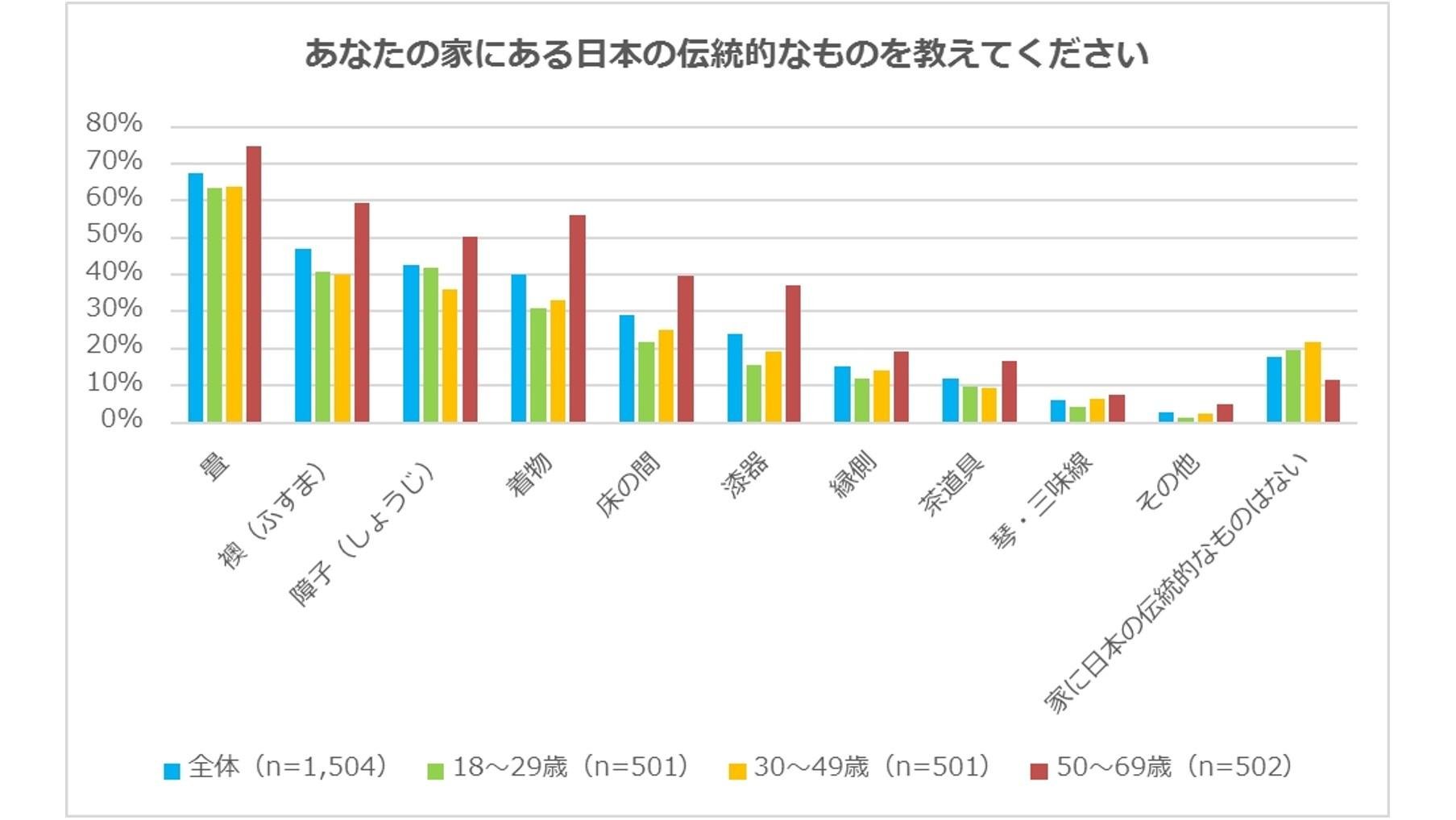
Traditional Japanese things in the home: 1st place "Tatami" 2nd place "Sliding doors" 3rd place "Shoji"
●If a foreign tourist asks you for directions, 90% of people will respond in some way
40% of people feel they want to learn a foreign language due to the increase in foreign visitors to Japan
●What do you usually keep in mind?
1st place: "Keeping appointments and being on time" 2nd place: "Maintaining good manners in public spaces"
3rd place: "Be polite" 4th place: "Use polite language" 5th place: "Always say hello"
50% feel confused or anxious about the increase in foreign visitors to Japan
60% feel a sense of security living in Japan
The number of foreign visitors to Japan in April, announced by the Japan National Tourism Organization on May 17, was 2,907,000, the highest number ever recorded for a single month. In this context, we conducted a survey of 1,504 men and women aged 18 to 69 to gauge awareness and psychological changes regarding the increase in foreign visitors to Japan.
First, when asked whether they felt confused or anxious about the continuing increase in the number of foreign visitors to Japan, 53.1% of respondents answered "very confused" or "somewhat confused or anxious," indicating that more than half feel confused or anxious about the increase in foreign visitors to Japan. Looking at the results by age group, the percentage of people who felt confused or anxious increased with age, reaching over 60% among those in their 50s and 60s.
On the other hand, when asked how they felt about living in Japan, 57.4% of respondents answered that they felt safe, indicating that a high percentage of people think that Japan is a safe country.
30% of people have become interested in Japan due to the increase in foreign visitors to Japan
Traditional Japanese things in the home: 1st place "Tatami" 2nd place "Sliding doors" 3rd place "Shoji"
Next, we asked whether the continued increase in the number of foreign visitors to Japan has caused them to take a renewed interest in Japan. 33.4% answered that they have "started to take an interest," 30.3% answered that they "had been interested in Japan before," and 36.3% answered that they "have no interest in Japan," indicating that 30% of people have started to take an interest in Japan as a result of the continued increase in the number of foreign visitors to Japan.
When asked to choose multiple answers to identify traditional Japanese items in the home as one of the characteristics that make it uniquely Japanese, the most common answer was "tatami mats" at 67.4%, followed by "fusuma" (sliding doors) at 46.8%, "shoji" (paper screens) at 42.8%, "kimono" at 40.1%, and "tokonoma" (alcove) at 28.9%, indicating that nearly 70% of people live in homes with a Japanese-style room with tatami mats. We also found that people in their 50s and 60s are more likely to own traditional Japanese items in their homes than other generations.
●If a foreign tourist asks you for directions, 90% of people will respond in some way
40% of people feel they want to learn a foreign language due to the increase in foreign visitors to Japan
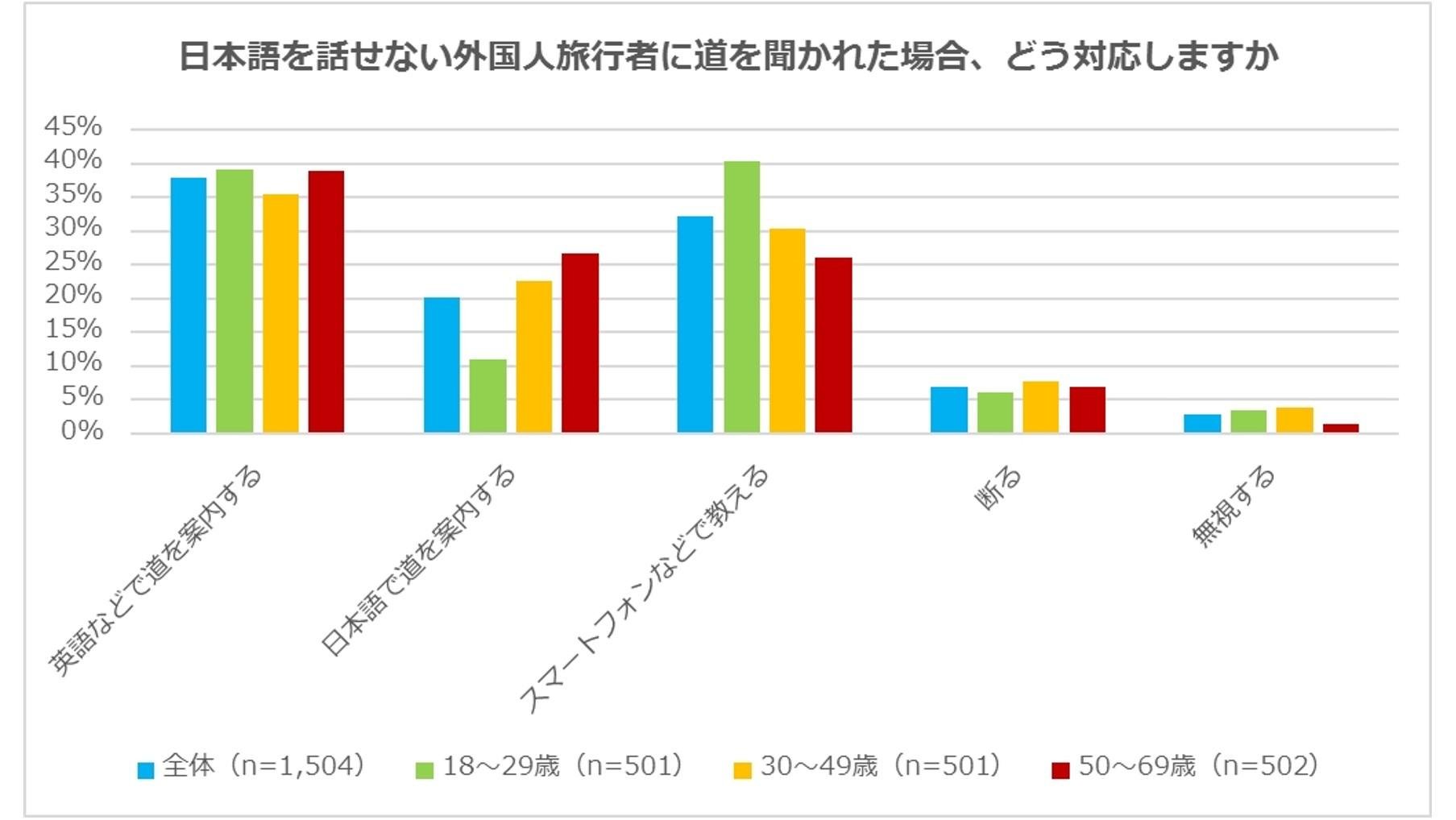
Next, we asked how people would respond if a non-Japanese speaking foreign tourist asked them for directions. The most common answer was "give directions in English or other languages" (37.8%), followed by "provide directions using a smartphone or other device" (32.2%), "give directions in Japanese" (20.1%), "refuse" (7.0%), and "ignore" (2.9%). Only 10% of people do nothing at all, and 90% of people give directions using English, Japanese, a smartphone, etc. When looking at the responses by age group, there was not much difference in the answer to "give directions in English or other languages," but the most common answer among young people in their teens and twenties was "teach using a smartphone or other device."
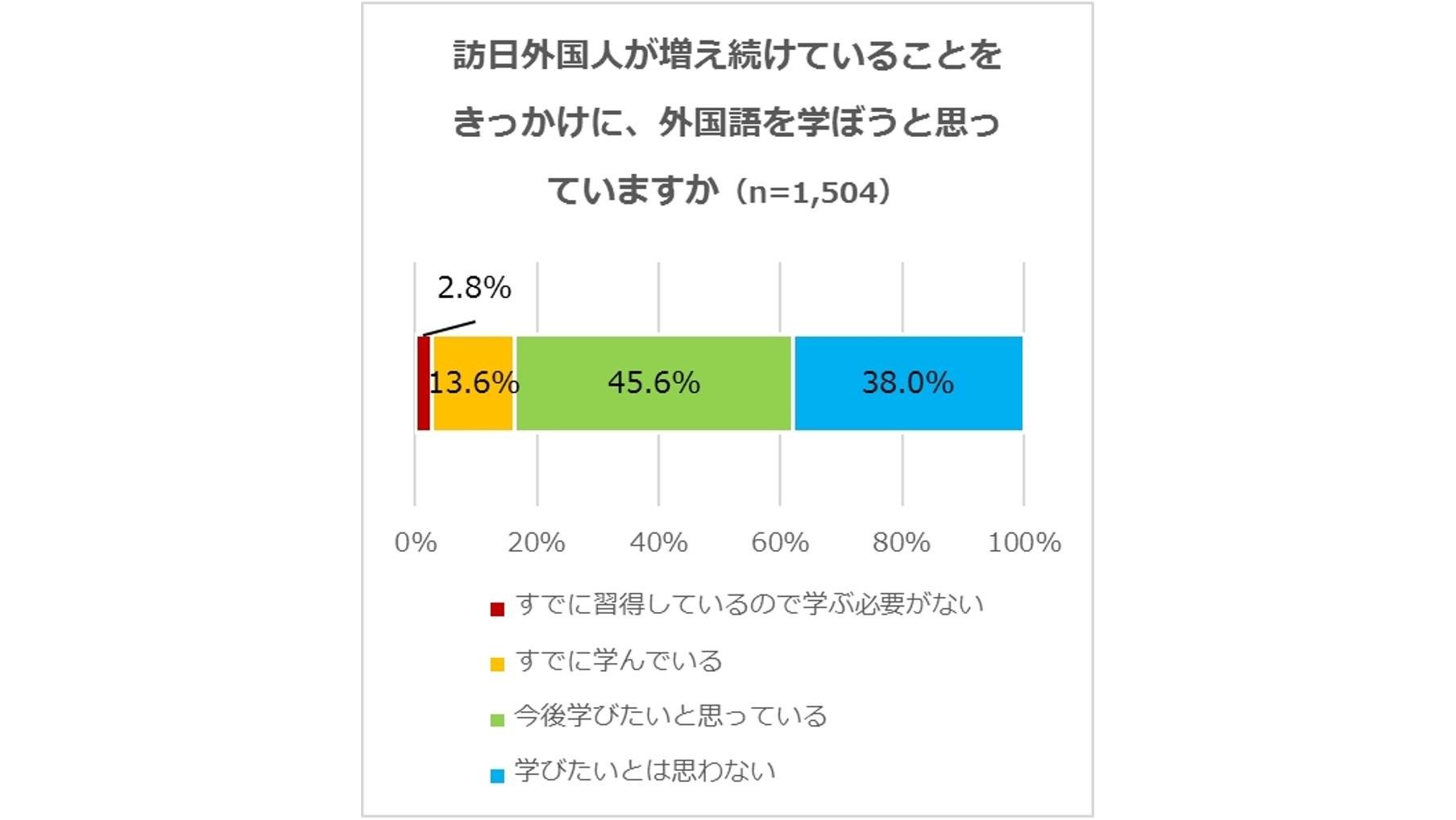
Regarding communication in a foreign language, for which 40% answered "giving directions in English etc.", when asked whether they were thinking about learning a foreign language in light of the continuing increase in foreign visitors to Japan, 45.6% answered "I would like to learn in the future," 38.0% answered "I don't want to learn," 13.6% answered "I am already learning it," and 2.8% answered "I already know it, so there is no need to learn it again," showing that the increase in foreign visitors to Japan has led to a strong desire to learn a foreign language such as English.
●What do you usually keep in mind?
1st place: "Keeping appointments and being on time" 2nd place: "Maintaining good manners in public spaces"
3rd place: "Be polite" 4th place: "Use polite language" 5th place: "Always say hello"
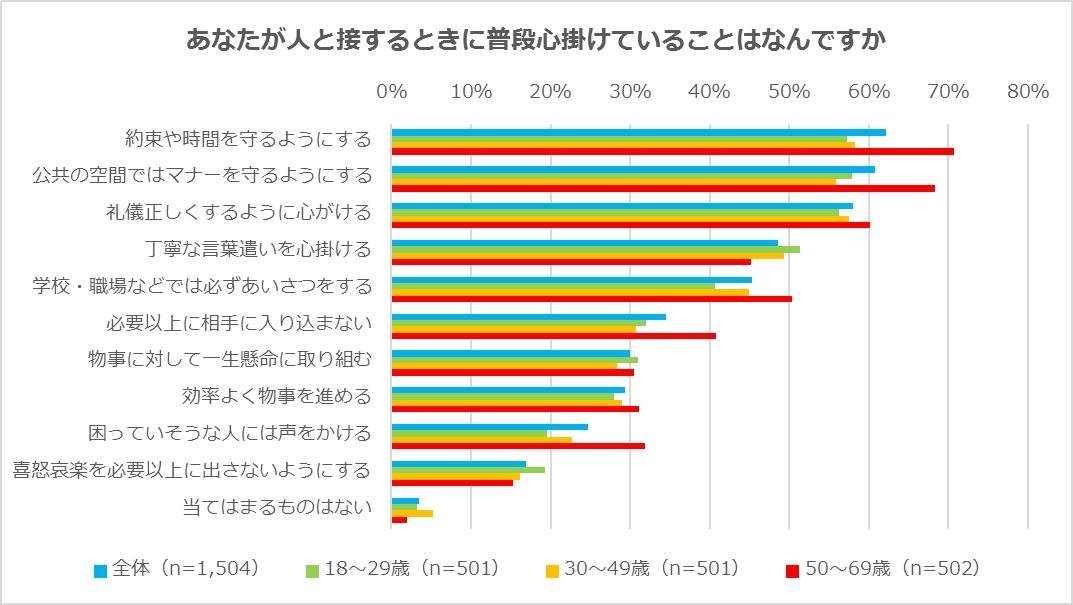
Finally, when asked to choose multiple answers to the question of what they usually keep in mind when interacting with others, the most common answer was "I try to keep appointments and be on time" at 62.1%, followed by "I try to observe manners in public spaces" at 60.7%, "I try to be polite" at 58.0%, "I try to use polite language" at 48.6%, and "I always greet people at school, work, etc." at 45.3%. The results show that many people are concerned about not making others feel rude. Looking at the results by age group, nearly 70% of people in their 50s and 60s make an effort to keep promises, be on time, and observe good manners, while over 50% of younger people in their teens and 20s make an effort to use polite language.
■ Survey Overview
Survey method: Internet (T Survey)
Survey period: February 23rd (Friday) to February 28th (Wednesday), 2018
Survey area: Nationwide
Survey subjects: Men and women aged 18-69 (T members)
Sample size: 1,504 people
Materials related to this matter
"Survey on foreign visitors to Japan and Japan" - With the increase in foreign visitors to Japan, how are Japanese people's attitudes changing? 40% "want to learn a foreign language" and 30% "have started to become interested in Japan"
Inquiries regarding this matter
Culture Convenience Club Co., Ltd.
Public Relations Officer: Ando
TEL: 03-6800-4464
If you resonate with the content of this site, please feel free to share it.


