
Survey on feelings about one year after the first state of emergency was declared
2021.04.07
Press Releases
CCC Marketing Co., Ltd.
ー新しい生活様式「ずっと続いた方がいい」という人が7割 "コロナ前"に戻ってきているのは「行動」>「精神」>「金銭」 、コロナ禍で新たに始めたことは1位「スポーツ」 2位「健康管理」 3位「料理」ー
CCC Marketing Inc. is pleased to announce that it conducted a survey on people's feelings approximately one year after the first state of emergency was declared using the online survey "T Survey," targeting 1,501 men and women aged 18 to 69.
■ Survey digest on feelings about one year after the first state of emergency was declared
40% of people have started or taken on new challenges during the COVID-19 pandemic
The most popular answer was "Sports (stretching and muscle training)" to maintain health (33.8%).
The second most popular answer was "health management" to maintain good health (26.0%).
The third place was "cooking" because I had time (21.5%).
●Compared to before COVID-19, to what extent has your living environment been affected in terms of "behavior," "financial," and "mental" aspects?
80% of people were affected "behaviorally," 60% "financially," and 80% "mentally."
The most serious problem in all of this is "students"
●Is things now back to how they were before COVID?
60% of people are returning to their pre-COVID levels in terms of behavior, 40% in terms of finances, and 50% in terms of mental health.
In terms of "behavioral" and "financial" aspects, self-employed and freelance workers are "even worse off"
"Mental health" of housewives is "getting worse"
In all respects, students are returning to pre-COVID times.
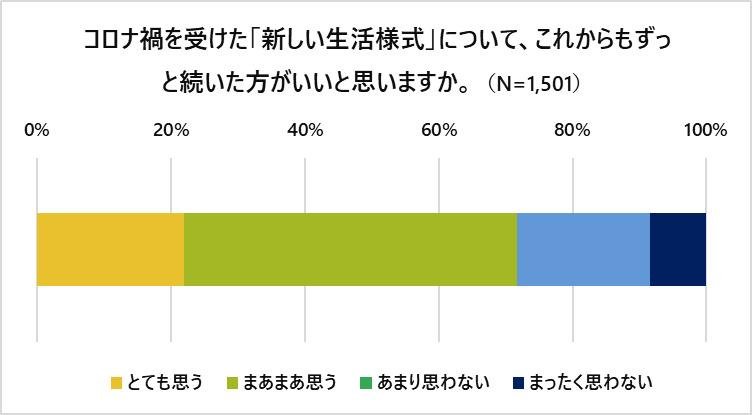
Regarding the "new lifestyle," 70% of people think it should continue indefinitely.
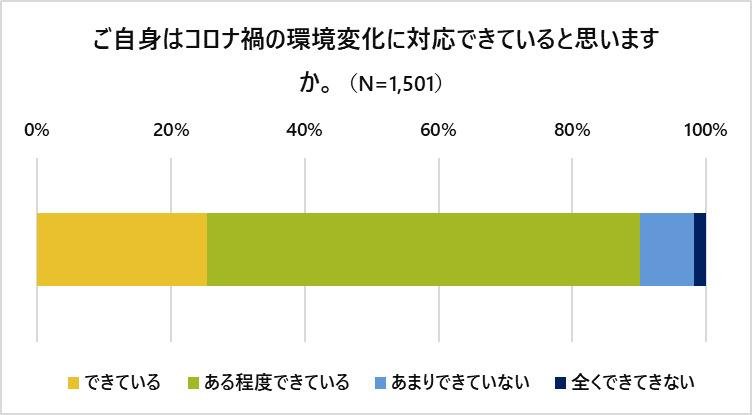
90% of companies are "able to adapt" to changes in the environment caused by the COVID-19 pandemic
40% of people have started or taken on new challenges during the COVID-19 pandemic
The most popular answer was "Sports (stretching and muscle training)" to maintain health (33.8%).
The second most popular answer was "health management" to maintain good health (26.0%).
The third place was "cooking" because I had time (21.5%).
April 7, 2021 marks exactly one year since the state of emergency was declared under the Special Measures Act for COVID-19 Countermeasures. In this T Survey, we conducted a survey on "feelings approximately one year after the first state of emergency was declared" targeting 1,501 men and women aged 18 to 69, in order to gauge how people's feelings have changed since the COVID-19 pandemic compared to before the state of emergency was declared, one year after the pandemic.
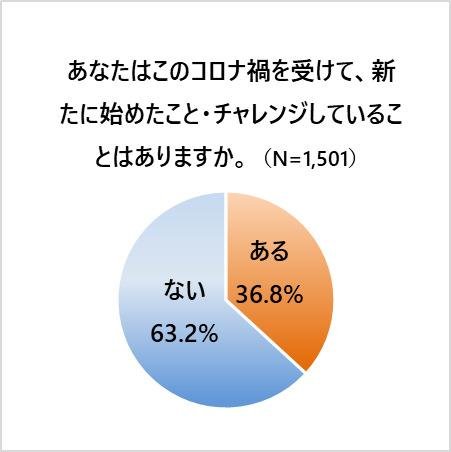
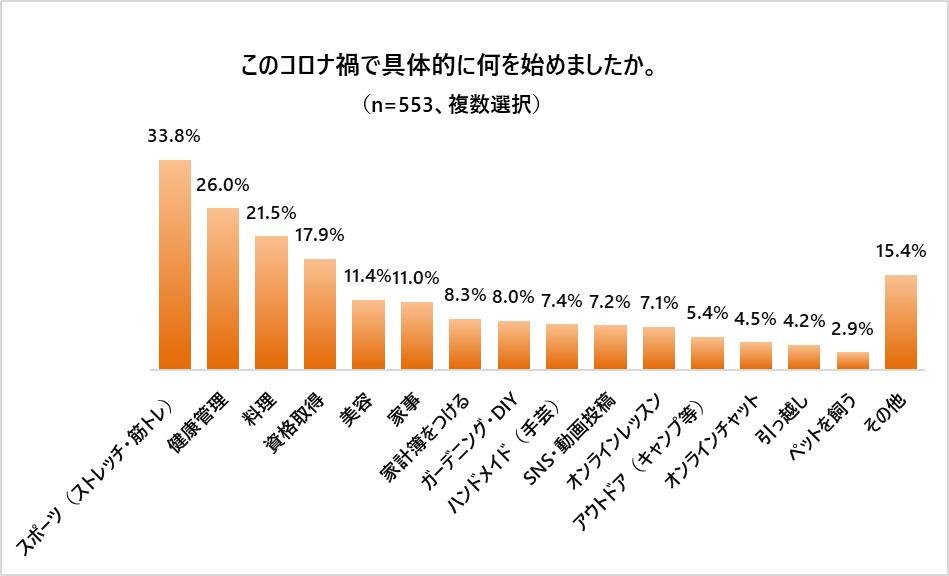
First, last spring, people were advised to stay home, and many people spent a lot of time at home. When asked if they had started or attempted anything new in response to the COVID-19 pandemic, 36.8% answered "yes," while 63.2% answered "no," meaning that 40% of people had started something new as a result of the pandemic. Of those, 553 people who answered "yes" were asked to select multiple options for what specific things they had started doing. The most common answers were "sports (stretching and muscle training)" (33.8%), "health management" (26.0%), "cooking" (21.5%), "obtaining qualifications" (17.9%), and "beauty" (11.4%). Looking at the results by gender, the top four remained unchanged for both men and women, with "housework" in fifth place, followed by "gardening/DIY" and "SNS/video posting" in sixth place for men, and "beauty" in fifth place, "handmade (crafts)" in sixth place, and "housework" and "keeping a household budget" in seventh place for women.
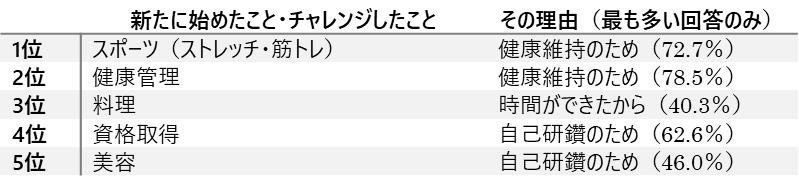
When asked why they had started each new activity, 70% of respondents answered "to maintain health" for the top-ranked "sports (stretching and muscle training)," 80% answered "to maintain health" for the second-ranked "health management," 40% answered "because I had more time" for the third-ranked "cooking," 60% answered "to improve myself" for the fourth-ranked "obtaining qualifications," and 40% answered "to improve myself" for the fifth-ranked "beauty" activity. These results show that many people have used the unexpected time created by the COVID-19 pandemic to start something new to maintain their health or improve themselves.
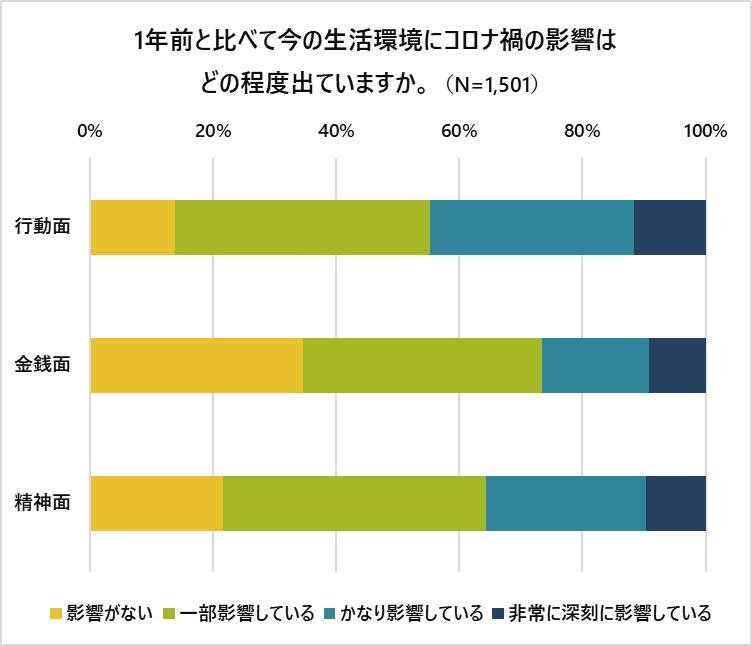
●Compared to before COVID-19, to what extent has your living environment been affected in terms of "behavior," "financial," and "mental" aspects?
80% of people were affected "behaviorally," 60% "financially," and 80% "mentally."
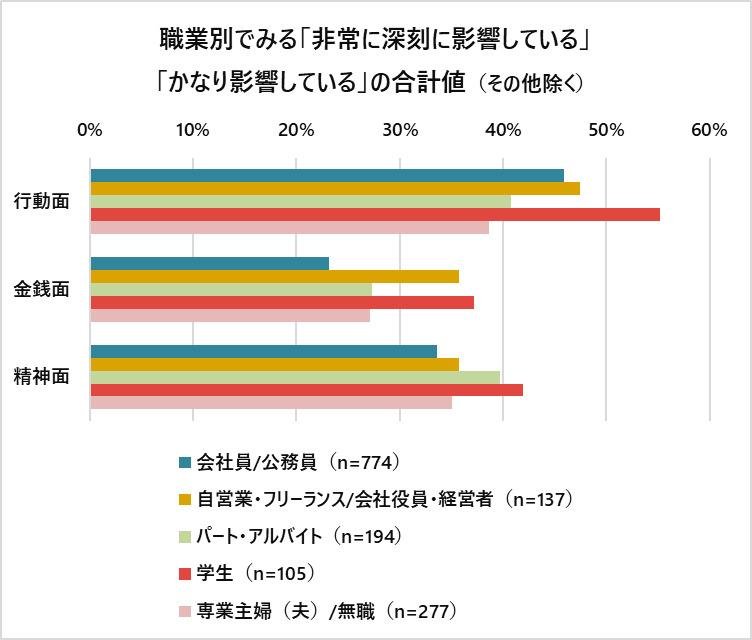
The most serious problem in all of this is "students"
Next, we asked respondents to what extent the COVID-19 pandemic has affected their current living environment compared to a year ago, in terms of "behavioral," "financial," and "mental" aspects. Regarding "behavioral," 86.2% of respondents answered that it has had a "very serious impact," "significant impact," or "some impact."Similarly, 65.3% of respondents said that it had affected them financially, and 78.3% said that it had affected them mentally, meaning that more than half of the people have been affected in some way in all aspects. Looking at the results by occupation, students were the most affected in all respects, with 55.2% of respondents saying that it had a "very serious impact" or "significant impact" on their behavior, 37.1% saying the same for financial matters, and 41.9% saying it had a "mental impact."
●Is things now back to how they were before COVID?
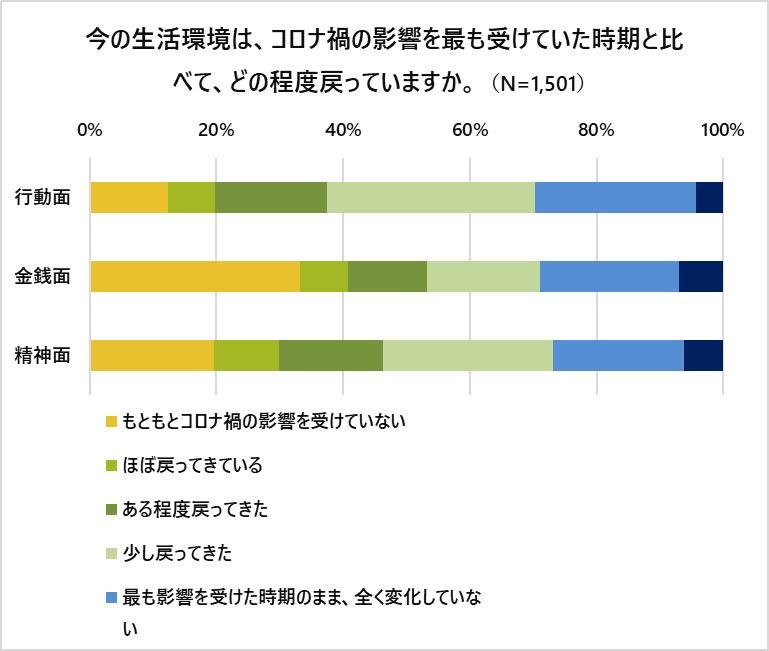
60% of people are returning to their pre-COVID levels in terms of behavior, 40% in terms of finances, and 50% in terms of mental health.
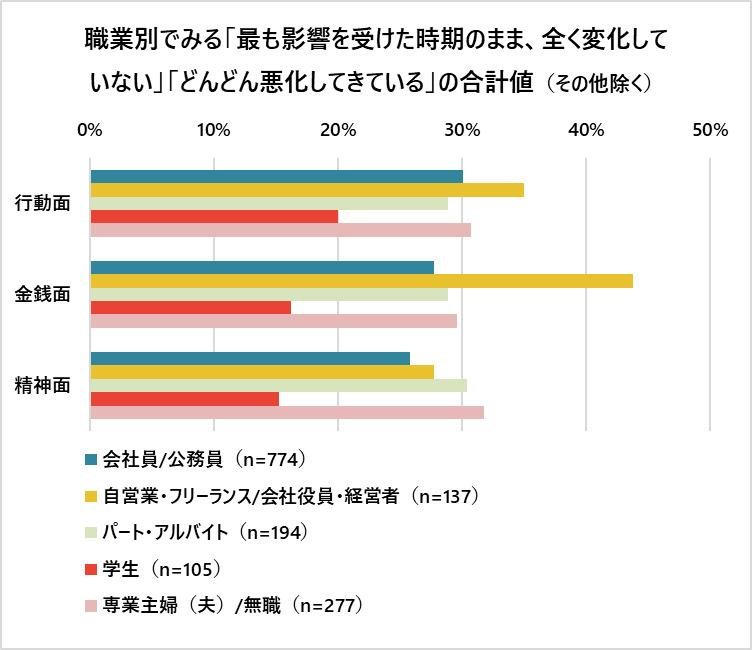
In terms of "behavioral" and "financial" aspects, self-employed and freelance workers are "even worse off"
"Mental health" of housewives is "getting worse"
In all respects, students are returning to pre-COVID times.
Next, respondents were asked to what extent their current living environment has returned to the state it was in terms of "behavioral," "financial," and "mental." In terms of "behavioral," 57.9% of respondents answered "almost back," "to some extent back," or "somewhat back." Similarly, for "financial," 37.8% answered the same, and for "mental," 53.5% answered the same. This shows that in terms of "behavioral" and "mental," more than half of respondents are returning to the state they were in before the pandemic. On the other hand, just under 30% of people responded that "it hasn't changed at all since the most impactful period" or "it's getting worse and worse" in all three aspects: behavioral, financial, and mental. Looking at the results by occupation, the highest percentage of people who answered "It hasn't changed at all since the most impactful period" or "It's getting worse and worse" were "self-employed/freelance/company executives/managers" (35.0%) in terms of behavior, "self-employed/freelance/company executives/managers" (43.8%) in terms of finances, and "full-time housewives/husbands/unemployed" (31.8%) in terms of mental health. On the other hand, the group with the highest percentage of respondents who answered "almost back," "somewhat back," or "somewhat back" in all three categories of "behavioral," "financial," and "mental" were "students."
Regarding the "new lifestyle," 70% of people think it should continue indefinitely.
90% of companies are "able to adapt" to changes in the environment caused by the COVID-19 pandemic
Finally, we asked about their awareness of the "new lifestyle."First, we asked whether people think the "new lifestyle" that has emerged in response to the COVID-19 pandemic should continue into the future. The total number of people who answered "I strongly agree" or "I somewhat agree" was 71.6%, indicating that 70% of people support the "new lifestyle."When looking at the total number of people who answered "I strongly agree" or "I somewhat agree" by age group, the figures were 77.9% for those in their teens and 20s, 69.1% for those in their 30s and 40s, and 70.8% for those in their 50s and 60s, indicating that support is stronger among the younger generations. Next, we asked whether they were able to adapt to the changes in their environment due to the COVID-19 pandemic, such as avoiding the three Cs, wearing masks, washing hands, ventilating the room, working remotely or using online services, and using mail order, takeout, and delivery services. 90.1% of respondents answered "I'm able to" or "I'm able to do so to some extent," indicating that most people are adapting to the changes in their environment due to the COVID-19 pandemic.
■ Survey Overview
Survey method: Internet (T Survey)
Survey period: Friday, February 26, 2021 to Tuesday, March 2, 2021
Survey area: Nationwide
Survey subjects: Men and women aged 18 to 69 (T members)
Sample size: 1,501 people
Materials related to this matter
Survey on feelings about one year after the first state of emergency was declaredMedia Inquiries
CCC Marketing Co., Ltd.
Public Relations Officer: Ando
TEL: 03-6800-4464
If you resonate with the content of this site, please feel free to share it.


