
3rd Golf Survey Vol.1: Signs of a shift from "business golf" to "family golf" amid the COVID-19 pandemic
2021.09.10
Press Releases
T Point Japan Co., Ltd.
- The image of it being "expensive" and "something only middle-aged and elderly people do" is declining.
T Point Japan Co., Ltd. (Headquarters: Shibuya-ku, Tokyo; President and CEO: Nagashima Hiroaki) conducted the first "Golf Questionnaire Survey" in December 2019 and the second in July 2020 to consider the future of the golf industry in light of recent challenges in the golf market. We have now conducted our third survey, and in Vol. 1 we are announcing the results of a survey on the actual situation of golfers during the COVID-19 pandemic. In addition, we will release Vol. 2, "What is the Reiwa golfer as determined from a database of 70 million people?" in October, and Vol. 3, "Analysis by golfer type," in November.

|
[Third Topic: Golf Survey]
● [People to play golf with] People are shifting from business to family golf ● [Reasons for playing golf] Growing need for "health consciousness" and avoiding crowds ● [Image of golf] Decreasing as an "expensive" and "sport for middle-aged and elderly people" and increasing as a "lifelong sport" and "family sport" ●【Why don't young people play golf?】The reasons why people in their 20s don't play golf are "money" and "lack of people to teach them" |
●Golfing partners have shifted from "workplace" and "friends" to "closer communities" such as "family/spouse."
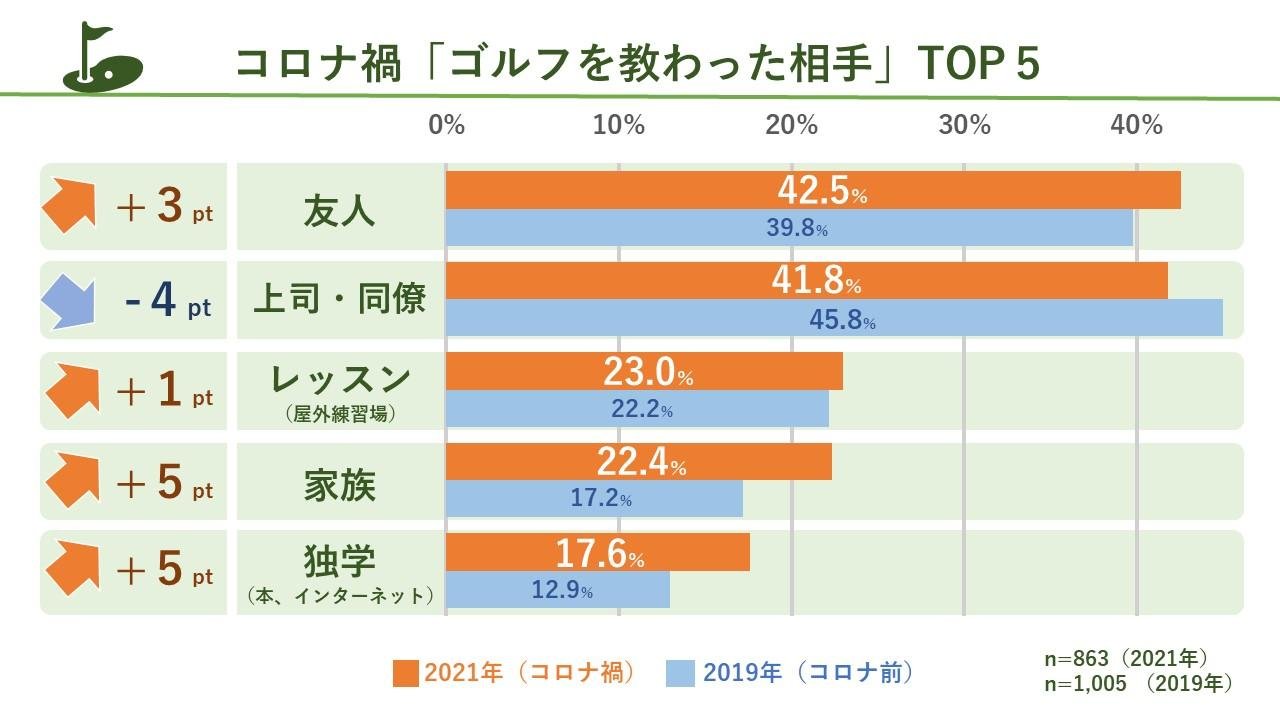
First, we asked the same question as in the first survey (2019): "Who will teach you golf?" and selected the top five answers. In this survey, the most common answer was "friends" (42.5%), followed by "bosses or colleagues at work" (41.8%), "lessons at outdoor golf driving ranges" (23.0%), "family" (22.4%), and "self-study using books or the internet" (17.6%). Furthermore, when comparing the results of each item with those of the first survey, there was a decrease in "superiors and colleagues at work" (-4 points), while there was an increase in "family" (+5.1 points), "self-studying through books and the internet" (+4.7 points), and "friends" (+2.7 points).
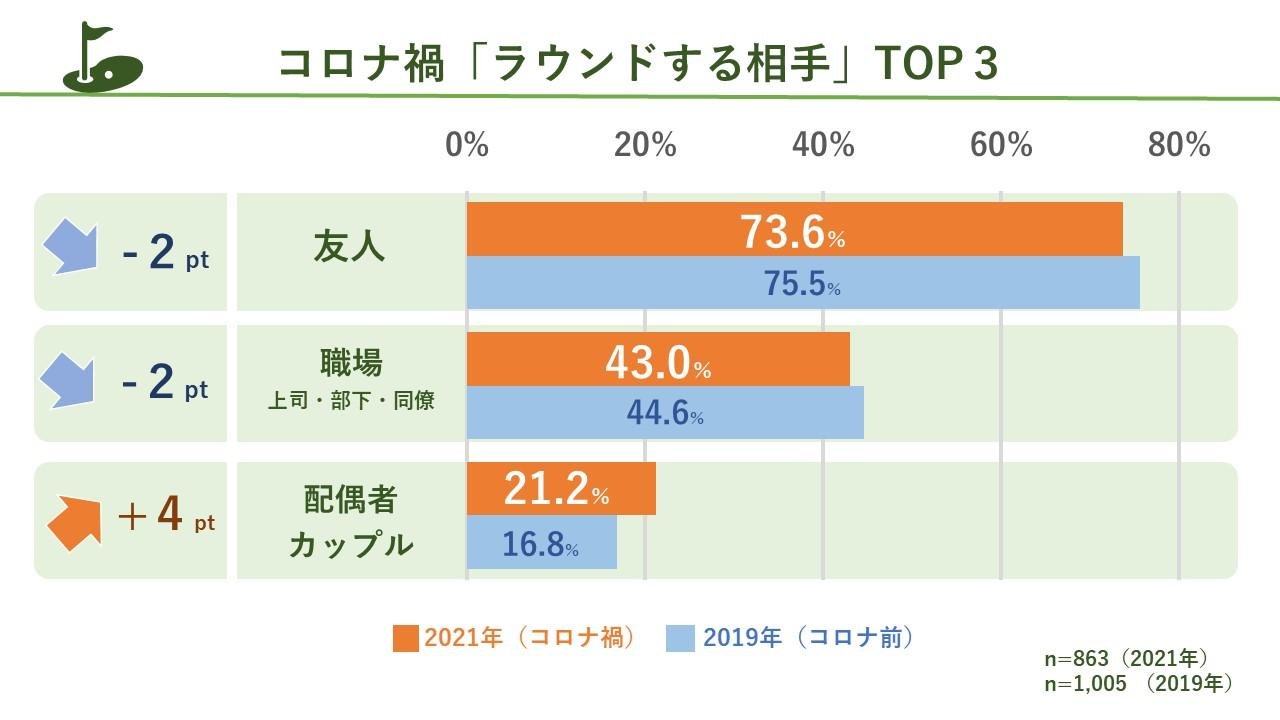
In response to the question, "Who would you like to play a round with?", the top three answers were "friends" (73.6%), followed by "boss/subordinates/colleagues" (43.0%) and "spouse/couple" (21.2%). However, when comparing each item with the results of the first survey, there was a decrease in "friends" (-1.9 points) and "superiors, subordinates, and colleagues at work" (-1.6 points), while there was an increase in "spouse/couple" (+4.4 points).
As opportunities for person-to-person contact have decreased due to the COVID-19 pandemic, including social distancing and an increase in working from home, there are signs that people are shifting from workplace communities such as superiors and colleagues or "friends" to more personal communities such as "family/spouse" when it comes to playing golf.
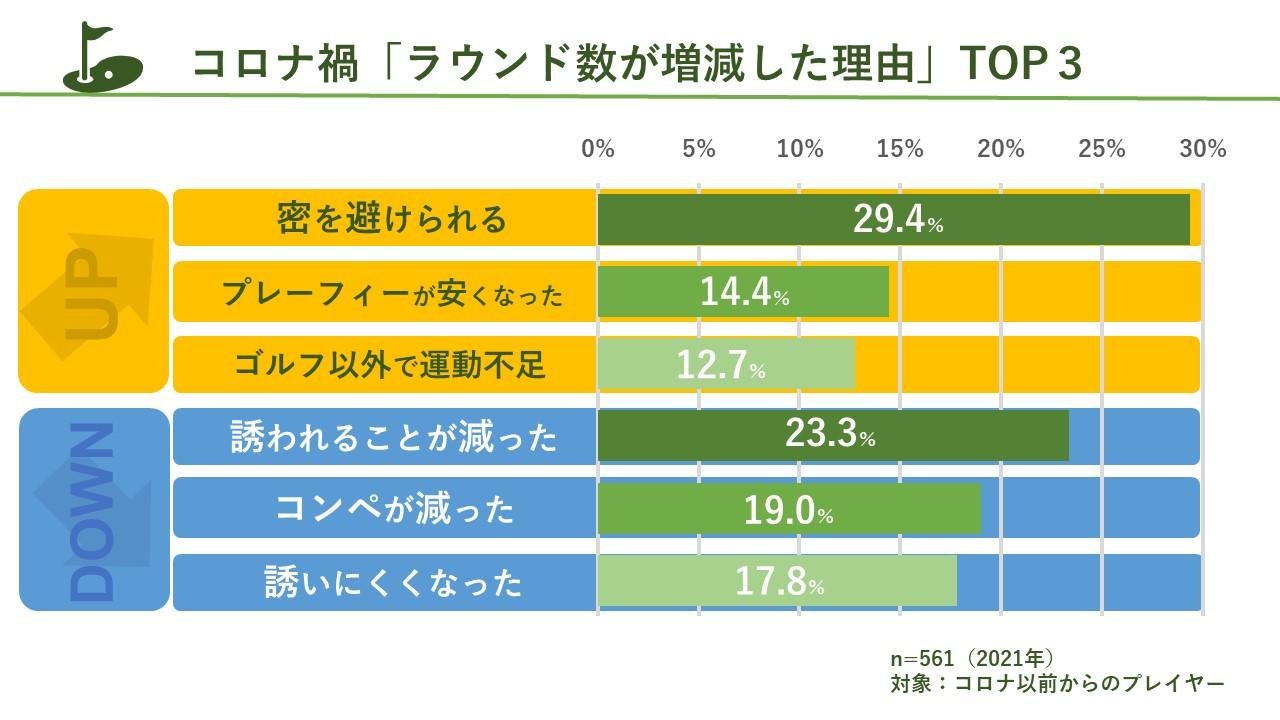
Additionally, when people who had been playing golf before the pandemic were asked "Why has the number of rounds increased or decreased?" the top three reasons given for an increase were "Because it's a sport that can be enjoyed while avoiding crowds" (29.4%), "Because playing fees have become cheaper" (14.4%), and "Because there are fewer opportunities to get physical activity other than golf" (12.7%). On the other hand, reasons given for a decrease included "Because people are less likely to invite me to play golf" (23.3%), "Because there are fewer competitions planned" (19.0%), and "Because I find it more difficult to invite others to play golf" (17.8%).
The reason for the increase in the number of rounds played even during the COVID-19 pandemic appears to be that the characteristics of golf, such as being able to avoid crowds and being able to get more exercise, are creating a positive impression in the new normal lifestyle. Additionally, the spread of working from home and teleworking may have eased time constraints, allowing people to enjoy golf in a more flexible environment. While these environmental advantages are leading to an increase in the number of rounds played, there is also a decrease in business and group golf opportunities, such as fewer planned competitions, making it more difficult to "invite someone" or "be invited by someone." As a result, the trend toward "golf in close communities" mentioned above may be on the rise.
●Reasons for playing golf are increasing, including a health-conscious attitude and a need to avoid crowds.
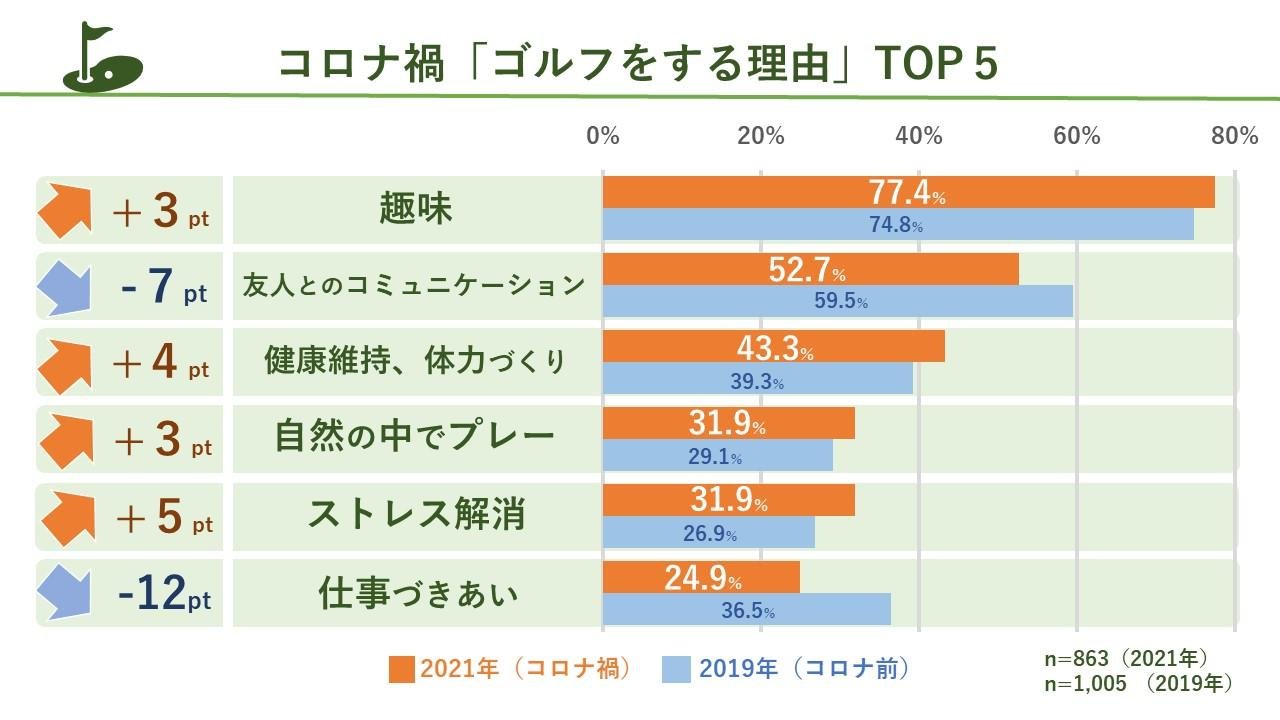
Next, following on from the first survey, the question "Why do you play golf?" was asked, with the top six answers this time being "as a hobby" (77.4%), "to communicate with friends/acquaintances" (52.7%), "to maintain health and improve physical fitness" (43.3%), "to play in nature" (31.9%), "to relieve stress" (31.9%), and "work-related social interactions" (24.9%). Compared to the first survey, there was a significant decrease in "work-related social interactions" (-11.6 points), while there were increases in "as a hobby" (+2.6 points), "to relieve stress" (+5.1 points), "maintaining health and improving physical fitness" (+4.0 points), and "being able to play in nature" (+2.8 points).
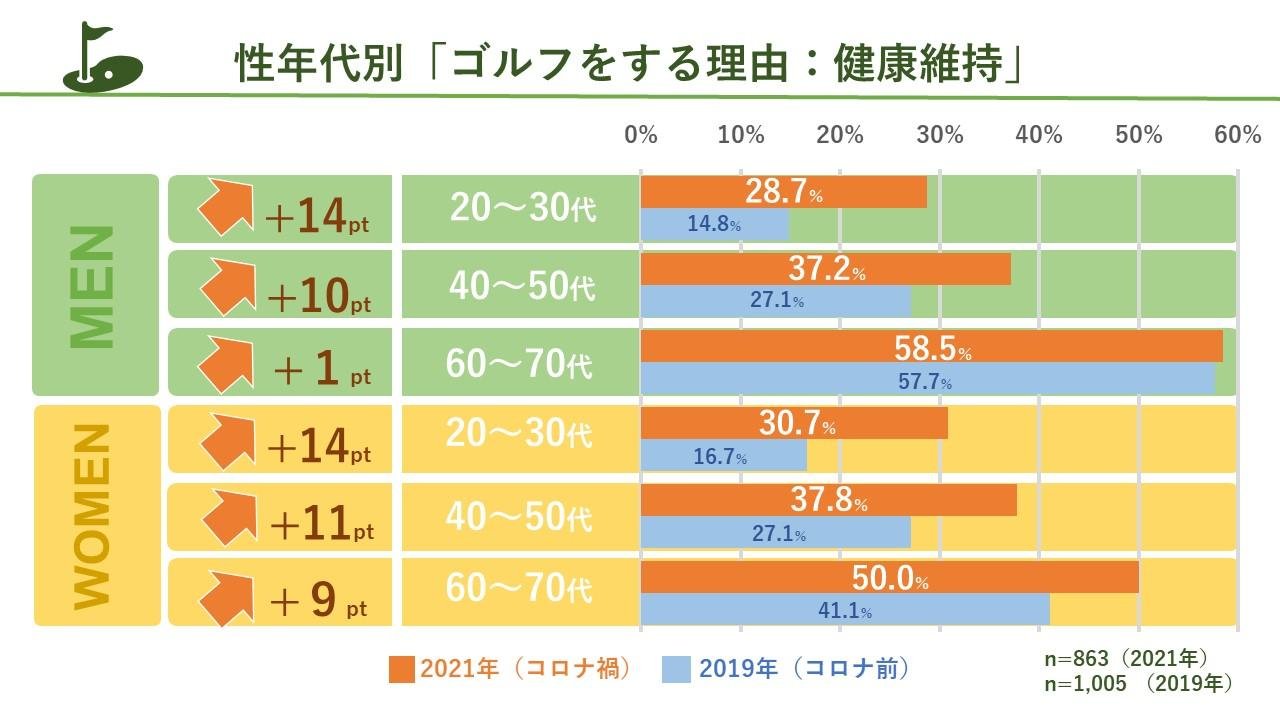
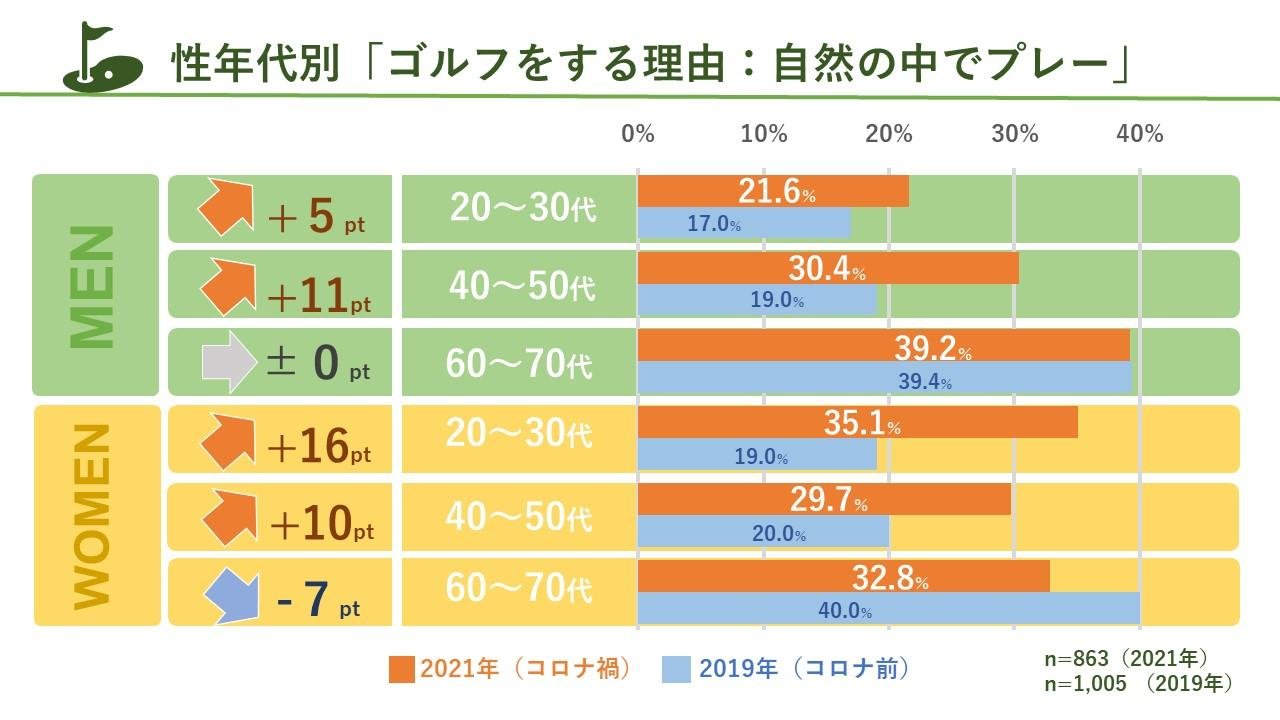
In addition, when comparing the response results by gender and age group and the difference from the first survey, for "maintaining health and building physical fitness," the greatest increase was seen in both men and women in their 20s and 30s (men: +13.9 points / women: +21.1 points), followed by those in their 40s and 50s (men: +10.1 points / women: +10.7 points) and those in their 60s and 70s (men: +0.8 points / women: +8.9 points), indicating that women in all generations had higher point increases than men. Additionally, for "being able to play in nature," the increasing trend for both men and women in their 20s and 30s (men: +4.6 points / women: +16.1 points) and 40s and 50s (men: +11.4 points / women: +9.7 points) exceeded that for those in their 60s and 70s (men: +0.2 points / women: -7.2 points).
It appears that people in their 20s and 30s in particular are becoming more health-conscious about golf during the COVID-19 pandemic than people in their 60s and 70s, who had been playing golf for the purpose of "maintaining health and improving physical fitness" even before the pandemic. Furthermore, with people being urged to avoid the three Cs, the value of golf as a sport that can be played in an open environment surrounded by nature seems to be attracting attention from young to middle-aged people.
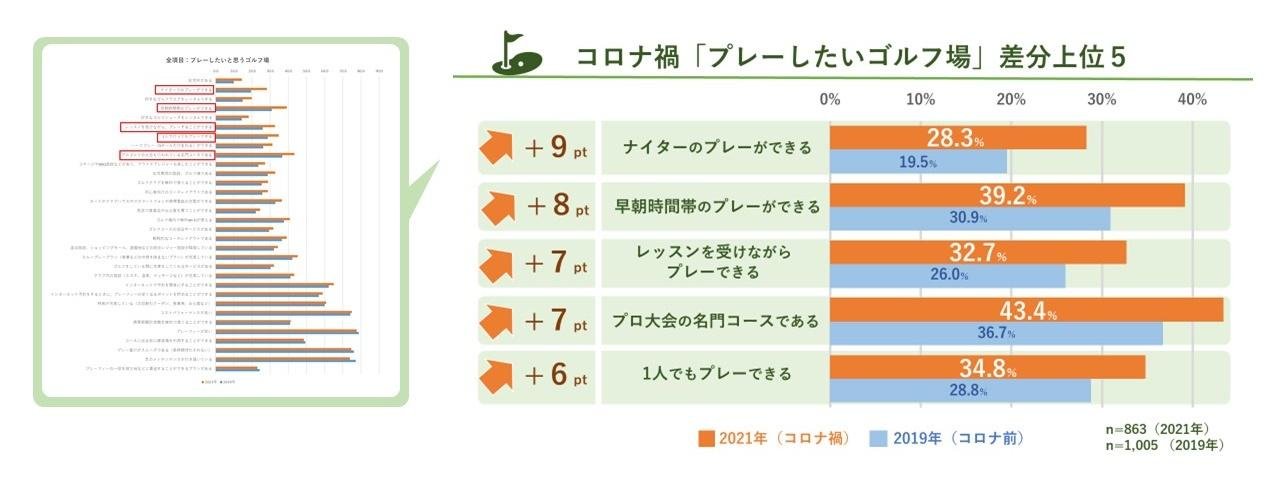
A similar trend was observed when asked, "Which golf course would you like to play at?"The top five areas with the biggest difference in points compared to the results of the first survey were "night play available" (+8.8 points), "early morning play available" (+8.2 points), and "you can play alone" (+6.0 points), showing a growing demand for golf courses where people can play casually while avoiding crowds.
●Is the image of golf no longer that of a "sport for rich middle-aged people"?
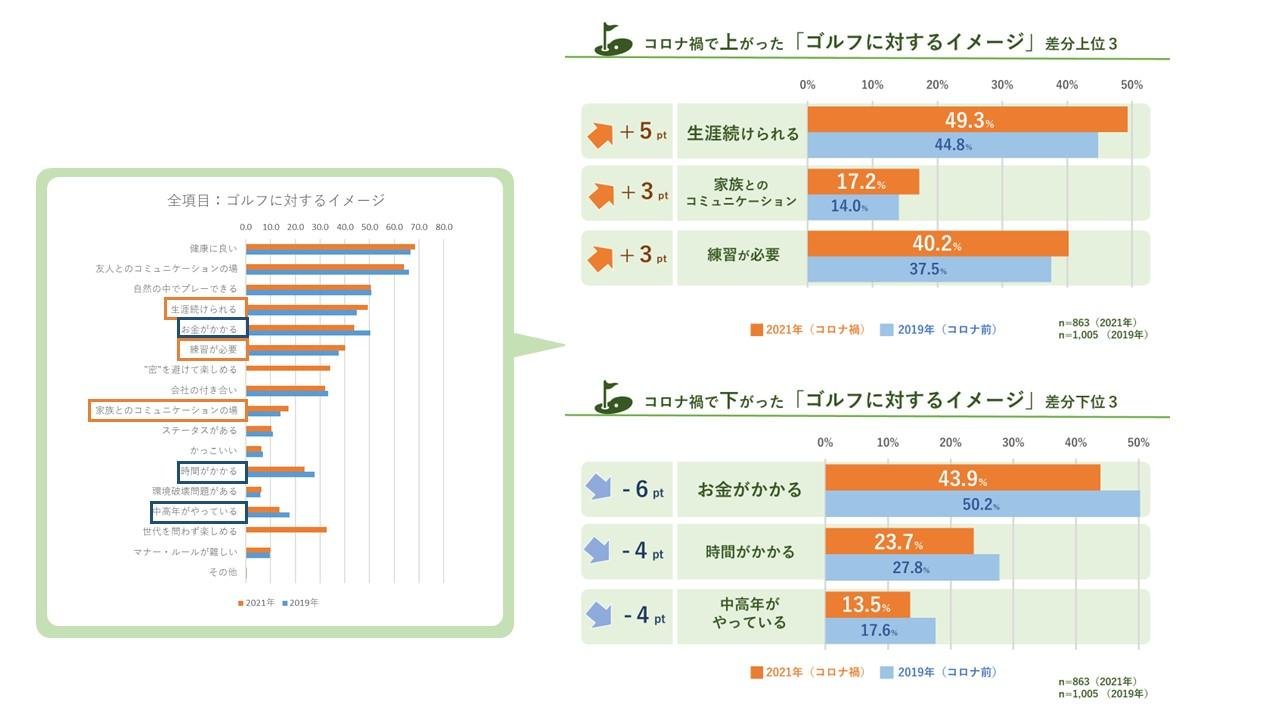
Next, in response to the question, "What is your image of golf?", the top three items showing differences from the first survey were "It can be done for a lifetime" (+4.5 points), "A place to communicate with family" (+3.2 points), and "It requires practice" (+2.7 points). On the other hand, the bottom three items showing differences from the first survey were "It costs money" (-6.4 points), "It takes time" (-4.1 points), and "It's something middle-aged and older people do" (-4.1 points).
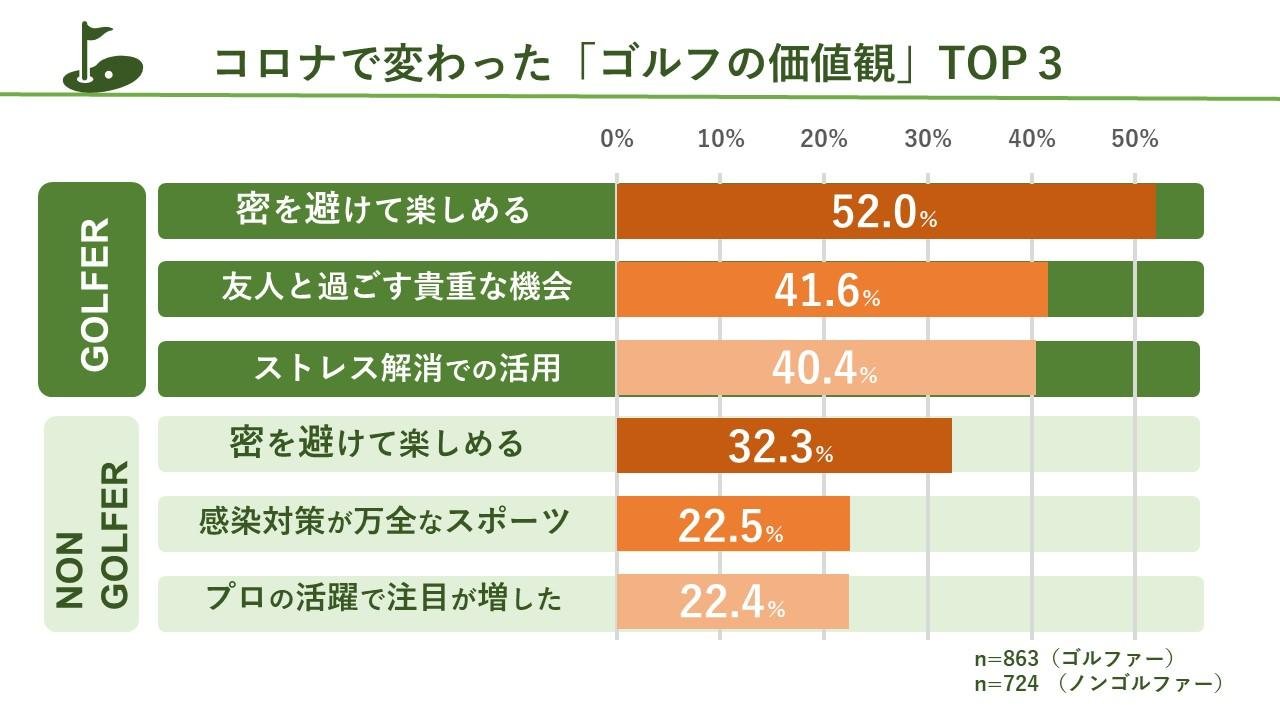
In addition, when the question "How has your image and values of golf changed due to COVID-19?" was analyzed separately for golfers and non-golfers, the top three answers for golfers were "It has gained more attention as a sport that can be enjoyed while avoiding crowds" (52.0%), "It has become a valuable opportunity and time to spend with friends and colleagues" (41.6%), and "It is now being used more to relieve stress" (40.4%). On the other hand, for non-golfers, the image of golf during the COVID-19 pandemic was that "it has become more popular as a sport that can be enjoyed while avoiding crowded places" (32.3%), "it has become more popular as a sport with thorough infection prevention measures" (22.5%), and "it has become more popular due to the success of professional golfers" (22.4%).
After the COVID-19 pandemic, the image of golf has shifted from negative impressions such as "expensive" and "something only middle-aged and elderly people do" to more positive impressions such as "a lifelong sport" and "a way to communicate with family" that can be enjoyed by people of all ages and genders. The success of young professional golfers also seems to have had a major impact. Furthermore, during the COVID-19 pandemic, golf was cited as a reason to play, and it appears that the image of safety and security is growing as a sport that can be enjoyed while avoiding crowds and a sport with thorough infection prevention measures.
●On the other hand, even if people in their 20s want to go for a round of golf, they don't have enough money or people to teach them!
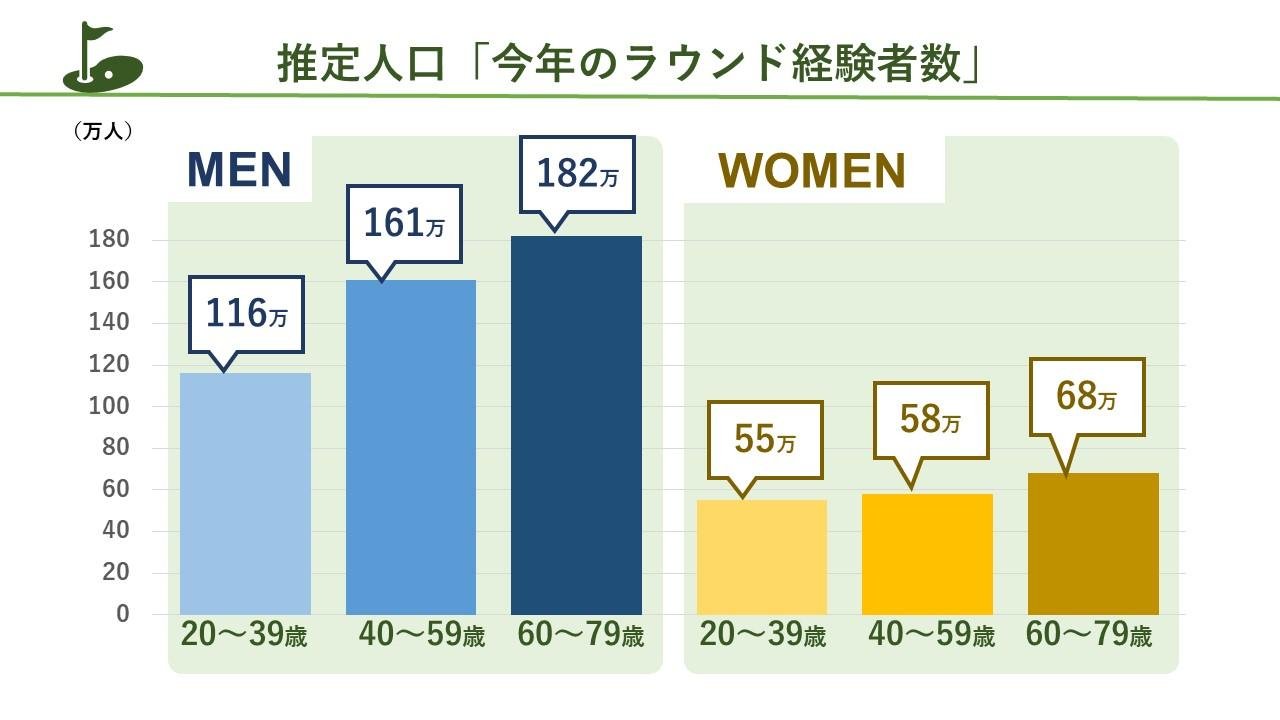
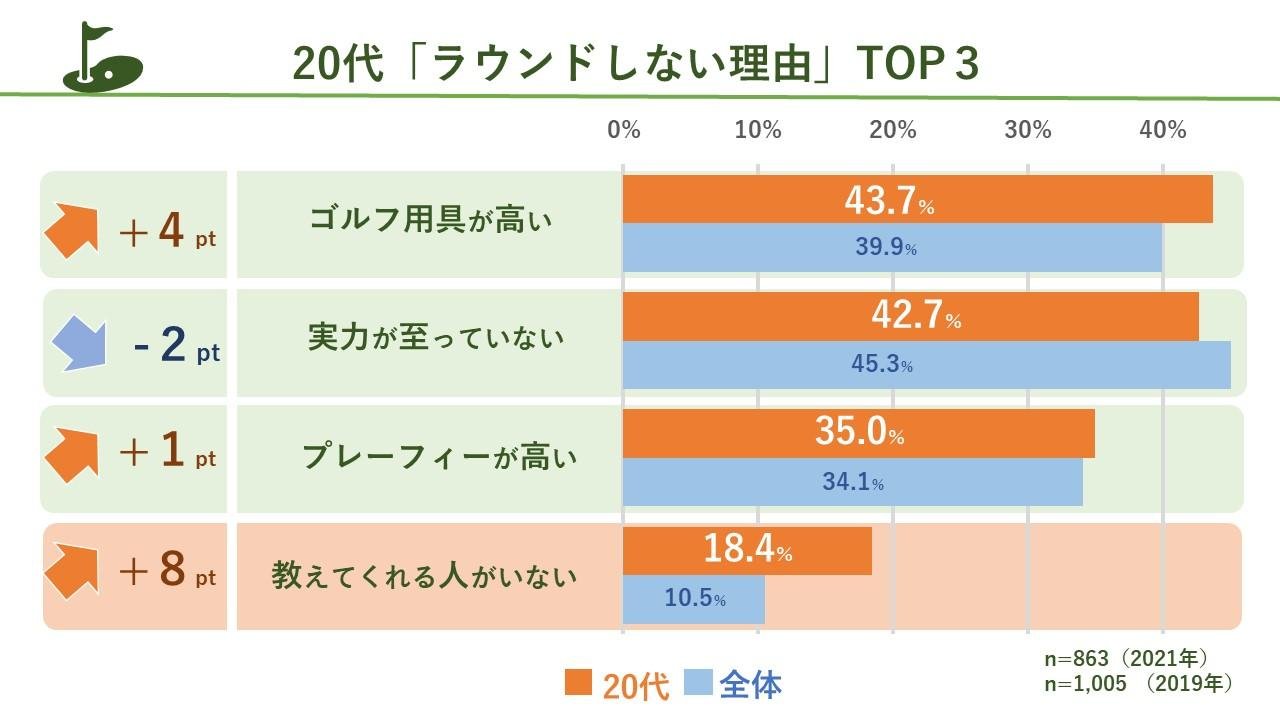
When analyzing the estimated population calculated from "people who have played a round within the past year" by gender and age, the lowest results were found for men aged 20-29 (approximately 1.16 million people) and women aged 20-39 (approximately 550,000 people), and there appears to be a tendency for the proportion of people with round experience to increase with age for both men and women. Furthermore, we focused on people in their 20s, who have the lowest number of golfing experience, and compared the differences between those in their 20s and the overall population in terms of "reasons for not making their golfing debut."The top three reasons cited by people in their 20s as "reasons for not making their first round" were "golf equipment is expensive" (43.7%), "I'm not yet skilled enough to play on a golf course" (42.7%), and "playing fees at golf courses are high" (35.0%). Furthermore, when comparing the difference between those in their 20s and the overall population, the reason "I'm not yet skilled enough to play on a golf course" (-2.6 points) was low, but "Golf equipment is expensive" (+3.8 points) and "Playing fees at golf courses are high" (+0.9 points) were higher than average. Additionally, when comparing people in their 20s with the general population, there was a large difference in the answer to "I don't have anyone to teach me golf" (+7.9 points).
In response to the question about the image of golf mentioned above, there was a decreasing trend in the impression that it is "expensive," but it appears that financial hurdles to playing golf for the first time are still high, especially for young people in their 20s. Furthermore, while opportunities to learn golf from people closer to you are increasing in response to the question "Who will teach you golf?", people in their 20s cited "there is no one to teach me" as the reason they don't play golf. Paradoxically, for young people who don't have anyone with golf experience in their immediate community, such as family members, there may be a growing need for indoor golf and online lessons now that golf communication at work is decreasing.
[Event held] What do professional golfers think about the latest golf survey?
Michiko Hattori and Daichi Suzuki, the first Commissioner of the Japan Sports Agency, will be appearing at the "Improvement Power" publication event
"It can also be used in business! How can top athletes develop the ability to turn situations around...?"
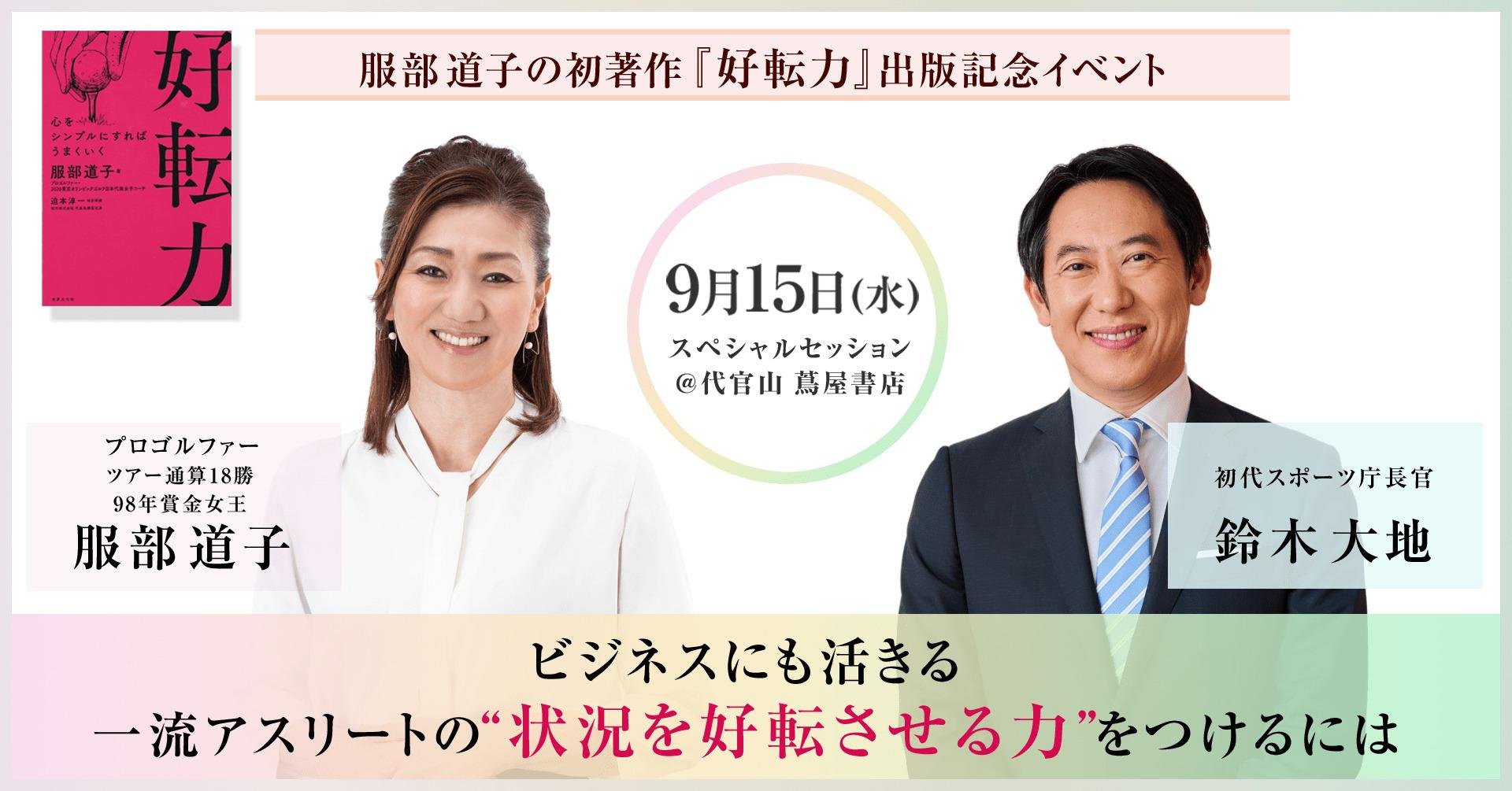
To commemorate the publication of "The Power of Turning Things Around," the author, professional golfer Michiko Hattori, and Daichi Suzuki, former Commissioner of the Japan Sports Agency, will be taking to the stage to introduce the book and hold a talk session on the theme of "the power of turning things around."In addition, Hattori and Suzuki will be presenting an analysis of the profile of golfers of each age group from the T-Point database, including the results of the third "Golf Survey" that was announced today. Based on the latest golfer data, the session will discuss the appeal and potential of golf from an athlete's perspective, as well as the role that golf as a sport plays in Japanese society.
For ticket purchases and applications, please refer to the following page.
>Event application form:Here
*Previous "Golf Questionnaire Survey"
・1st "Golf Survey"
・2nd "Golf Questionnaire Survey"
Survey overview
Survey period: Wednesday, August 18, 2021 to Tuesday, August 24, 2021
Survey organization: CCC Marketing Co., Ltd. T Survey (online survey of T members)
Survey target: Nationwide / Men and women / aged 20-79
Subject screening: Whether or not you have played golf on a golf course or at a driving range in the past year
Number of subjects: 1,784 (1,242 men, 542 women)
Materials related to this matter
3rd Golf Survey Vol.1: Signs of a shift from "business golf" to "family golf" amid the COVID-19 pandemic
Inquiries regarding this matter
T-Point Japan Co., Ltd. Public Relations Officer: Nonaka
TEL: 03-6800-4464
If you resonate with the content of this site, please feel free to share it.


