
Co-creation platform "T-CARD Everyone's Ethical Food Lab" launches "Unused Fish Utilization Platform" - What can we make with "wasteful fish"?
2022.07.29
Press Releases
CCC MK HOLDINGS Co., Ltd.
— Together with three regions: Yawatahama City in Ehime, Nishiizu Town in Shizuoka, and Funabashi City in Chiba —
CCC Marketing Co., Ltd. (Head office: Shibuya-ku, Tokyo; CEO: Makoto Tashiro) launched the "T-CARD Everyone's Ethical Food Lab" (https://ethicalfoodlab.tsite.jp/) in March 2021, a co-creation platform that utilizes T's unique data*1 and assets to think about and take action on ethical food actions that lead to the global issue of "sustainable food" through dialogue with stakeholders with a wide range of knowledge across industries, primarily consumers, to address issues that would be difficult to solve by a single region or company alone. We are pleased to announce that we have launched a project called the "Unused Fish Utilization Platform," which will work on product development and awareness-raising for "ethical food" that focuses on unused resources.
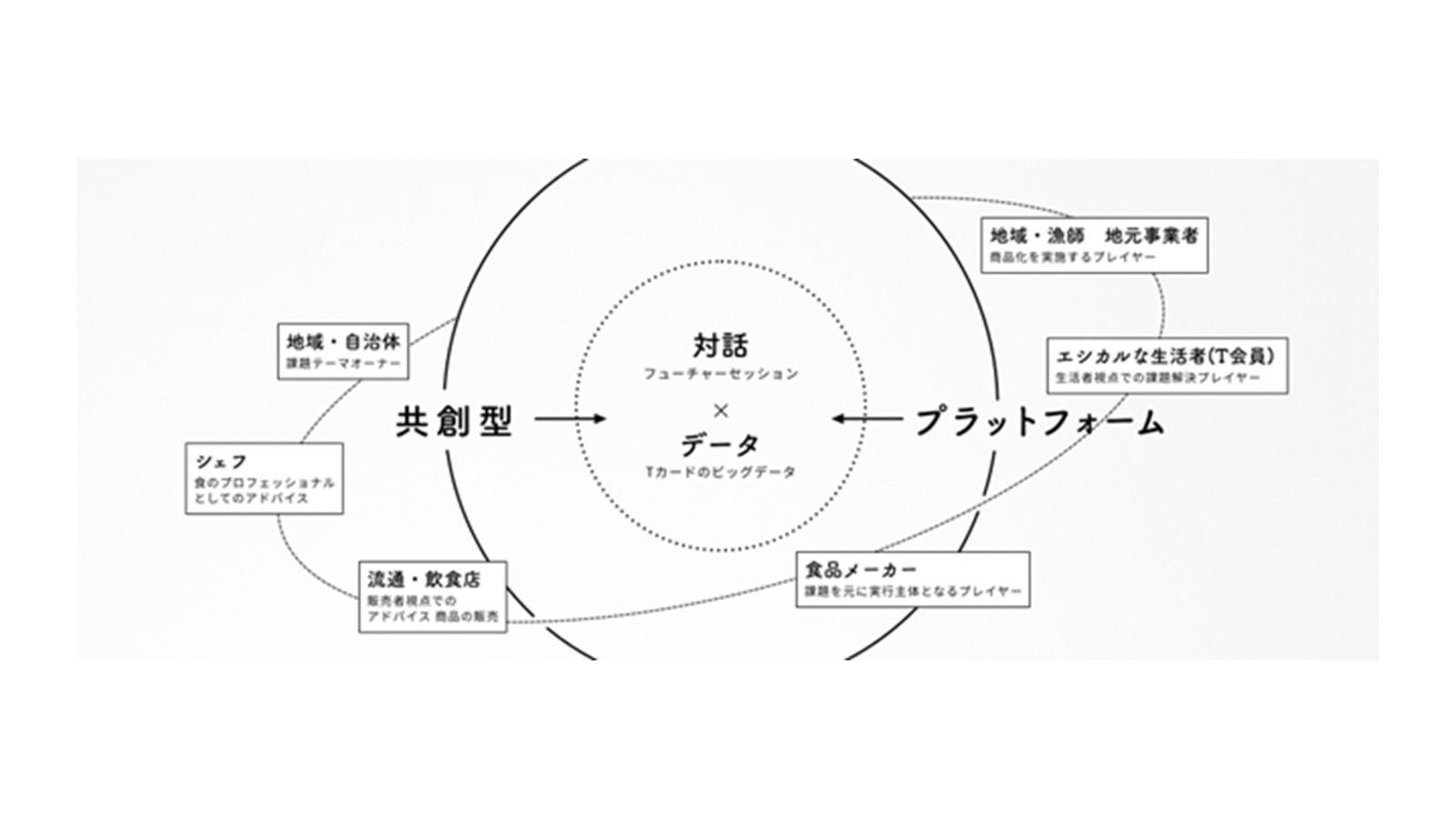
CCC Marketing conducted the "Goto Fish Project" in 2018 (https://tsite.jp/r/tcardsocial/goto/). Through this project, we came to realize that Japan, a country blessed with a rich ocean environment, can utilize unused fish while gaining the empathy of consumers by adding value through various ingenuity, and that this has the potential to build a future for the bounty of the sea, sustainable fishing, and Japanese food culture. The Unused Fish Utilization Platform will utilize the experience gained from the Goto Fish Project to tackle social issues that would be difficult for one region or one company to solve alone, working with stakeholders with a wide range of knowledge, including T members who are actively pursuing ethical eating habits, local stakeholders such as government officials and local businesses, distribution companies, and chefs.
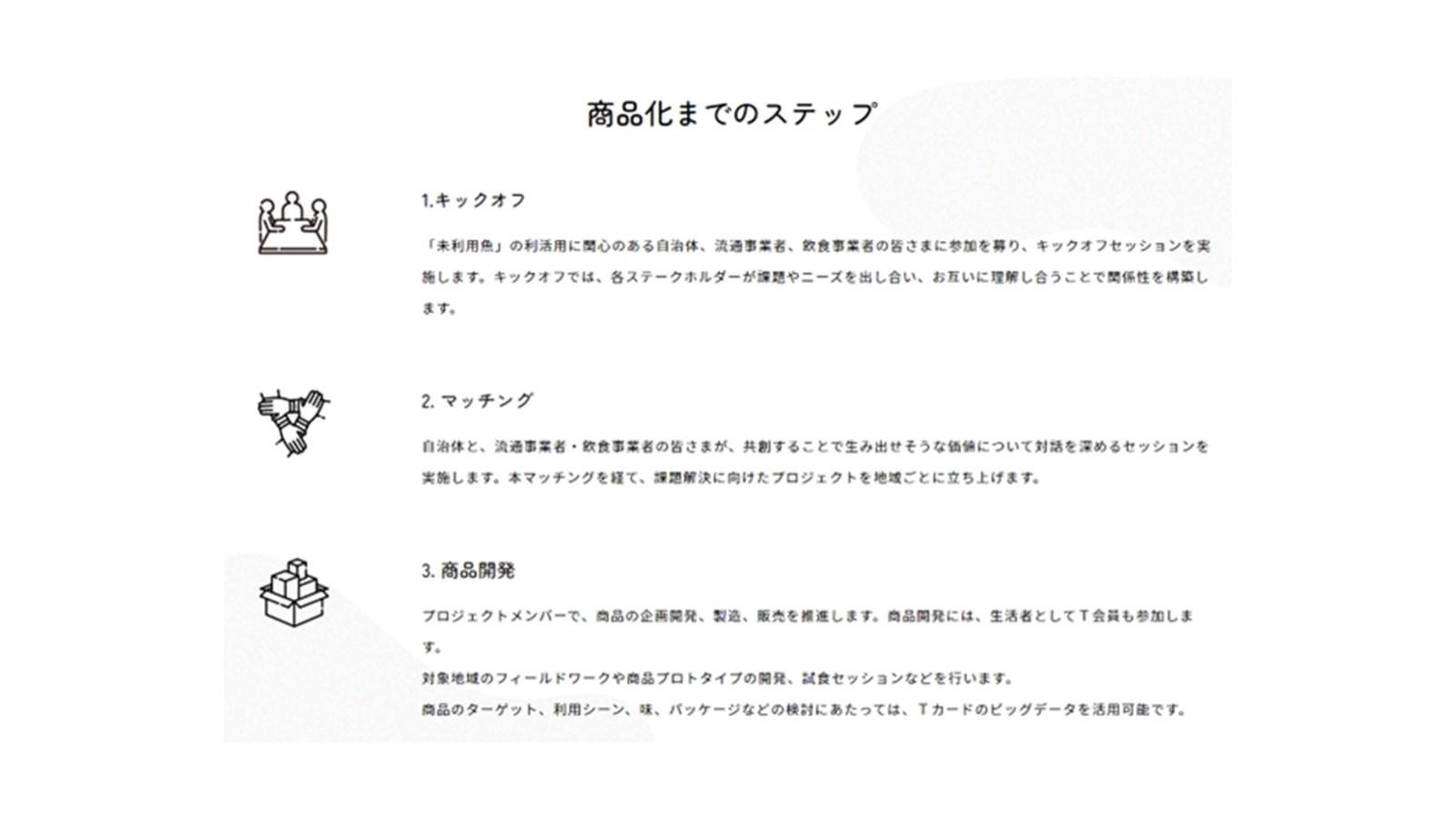
The "Unused Fish Utilization Platform" has CCC Marketing as the project owner, and as a first step, will hold a kickoff matching session on Friday, July 29, 2022 to identify partners to work with on the project. In order to hold the matching session, we listened to the needs of each region across Japan and held repeated dialogues with each region, and as a result, three regions were selected to participate: Yawatahama City in Ehime Prefecture, Nishiizu Town in Shizuoka Prefecture, and Funabashi City in Chiba Prefecture. Additionally, the matching session will feature participation from distribution partners Kodawariya Co., Ltd., Shinanoya Foods Co., Ltd., and Maruetsu Co., Ltd., as well as Associate Professor Takahiro Matsui of the Graduate School of Tokyo University of Marine Science and Technology, an expert in research and activities related to sustainable fisheries management and revitalization of fishing villages based on fisheries economics and resource management. After this kick-off matching session has established a match between the region and distributors, the project will begin in earnest in November to develop and raise awareness about products that utilize unused fish.
Matching session participants ※In alphabetical order
<Yawatahama City, Ehime Prefecture>
・Project leader: Ocean Dream Co., Ltd.
Members: Ehime Prefectural Government Fisheries Division, Yawatahama Chamber of Commerce and Industry, Yawatahama Century Hotel
・Target unused fish: Rabbitfish
<Nishiizu Town, Shizuoka Prefecture>
・Project leader: Hambata Market (Nishiizu Direct Sales Business Association)
Members: Shio Tokumaru, Kanesa Katsuobushi Shoten, Sankakuya Suisan Co., Ltd., Nishiizu Town Hall
・Target unused fish: Rabbitfish, lowfin chub
<Funabashi City, Chiba Prefecture>
・Project leader: Kaiko Bussan Co., Ltd.
Members: Nagasawa Co., Ltd., Funabashi City Fisheries Cooperative Association, Funabashi City Agriculture and Fisheries Division
・Target unused fish: Konoshiro
<Distribution>
・Kodawariya Co., Ltd.
・Shinanoya Foods Co., Ltd.
・Maruetsu Co., Ltd.
■Comment from Yawatahama City, Ehime Prefecture
Yawatahama Fishing Port in Ehime Prefecture is a port town that boasts one of the largest fishing yields in western Japan. Approximately 200 types of fish are landed annually at this highly sanitary fish market, which was established in 2011. The current situation is that the annual catch, which was 15 billion yen about 30 years ago, has decreased to 3 billion yen last year. As this was a town of trawlers, bottom trawling fishing is the predominant method, and we believe that urgent measures are needed, such as increasing the mesh size of the nets and extending the closed period for whitebait fishing.
Through this initiative, we hope to contribute to improving the income of local fishermen, developing new menu items at local restaurants, and promoting sustainable fishing by developing new products using unused fish.
■Comment from Nishiizu Town, Shizuoka Prefecture
Nishiizu Town is surrounded by Suruga Bay to the west and receives a branch of the Kuroshio Current, meaning that a variety of fish species are caught throughout the seasons. And because most of the coastal area is made up of rocky shorelines, there are always sea fish mixed in. Among these fish, the lowfin chub and the rabbitfish are synonymous with the most hated species, and although they are caught using fixed nets, they are hardly worth anything, so no other fishermen target them, and they are essentially left unchecked. It is estimated that there are considerable resources around the rocky shores. Additionally, damage to seaweed caused by lowfin chubs and rabbitfish is said to be one of the causes of the problem of coastal barrenness that has become a problem in recent years, and how to deal with this is a major issue for the future. The main reason why these fish species are disliked is that in the past it was difficult to keep them fresh, causing their internal organs to smell and become inedible, and they also have a unique sea smell to begin with.
However, nowadays, thanks to proper temperature control to prevent odors from occurring and recipes that reduce the fishy smell, it is possible to eat it deliciously. Therefore, if we can raise the prices of lowfin chub and rabbitfish through this initiative, it will not only help stabilize the income of fishermen, but it will also contribute to optimizing resource levels and ultimately lead to measures to prevent coastal barrenness. The restoration of the fertility of the seashore is expected to have a positive impact on the catch of major fish species in Nishiizu, such as spiny lobster, abalone, turban shell, amakusa, and hijiki. Coastal denudation is a problem not just in Nishiizu but throughout the country, and if this initiative produces some results, it could contribute to improving Japan's coastal environment and lead to the promotion of sustainable fishing. It is a great pleasure to be standing with you all at the starting line where we may be able to take such a step, and I have high hopes for it.
■Comment from Funabashi City, Chiba Prefecture
Kohada is a staple of Edomae sushi. The "first" of these, Shinko, is a product of the meticulous sushi chefs and the Edo spirit, and its market price can reach tens of thousands of yen per kilogram. However, when it comes to the adult Konoshiro fish, people don't like the small bones and unique dot pattern, so it has become something that is hardly ever eaten by humans. Therefore, it has no market value and is currently used as bait or feed for tuna longlines, with a trading price of just 20 to 40 yen per kilogram. This is nothing more than the ego of Japanese people who are said to love fish.
On the other hand, Japanese people's tastes for fish are centered on the standard "major fish," and the decline in marine resources in Japanese waters has led to a reliance on imports from overseas to meet demand, but with the stagnation of the Japanese economy and the weak yen, it is becoming increasingly difficult to secure imports. In order to respond to the upcoming "protein crisis," the development of processed products using gizzard shad, an underutilized fish that is relatively abundant in resources and delicious to eat, can be said to be a project with great dreams.
Furthermore, for fishermen who will continue to live in Tokyo Bay, an urban sea that was once damaged by coastal development, with an eye to the next 100 years, this project will also have a major impact on coastal fishermen across the country, and could serve as a guidepost for breaking away from the negative spiral of "we can catch a lot, but it's cheap," "because it's cheap, we have to catch even more," and "as a result, resources only decrease and the fishing industry declines."
Through the "Unused Fish Utilization Platform," CCC Marketing will invite T members and experts with knowledge and diverse perspectives in the fields of SDGs, sustainability, food, and marine policy to participate in dialogue to realize "sustainable food," and will work to develop and raise awareness of products using unused resources within the context of "ethical food."Furthermore, each and every activity of the "T-CARD Everyone's Ethical Food Lab" will contribute to creating a food cycle that will connect to the future.
[Members of the "Unused Fish Utilization Platform"] (hereafter, in alphabetical order, titles omitted)
■ Certified Public Accountant Shigeki Uekusa (Visiting Professor at Tokyo University of Agriculture, Director of the Industry-Government-Academia Collaboration Department at the Graduate School of Project Design)
Specialty: Support for the perspective of sixth-sector industrialization and regional collaboration
■ Chefs for the Blue General Incorporated Association Hiroko Sasaki
Specialty: Promoting projects based on knowledge of food and ethical issues
■ Takahiro Matsui, Associate Professor, Department of Marine Policy and Cultural Studies, Tokyo University of Marine Science and Technology
Areas of expertise: Fisheries economics, research and activities related to sustainable fisheries management and revitalization of fishing villages based on resource management
■Future Sessions Inc. Hideyuki Arifuku, Rena Shibaike
Area of expertise: Planning and management of multi-stakeholder dialogues
■CCC Marketing Co., Ltd. Nozomi Takita, Emiko Nakagishi, Teruhisa Ishibashi, Chisato Yuasa
*1: Unique data refers to approximately 70 million single IDs, over 3.5 billion purchase transactions per year, 6 billion types of product data handled by a network of 150,000 stores, customer DNA persona data consisting of approximately several thousand items, offline and online movement and behavior data, media contact data, and CCC MK Group's original enhanced data.
Materials related to this matter
Co-creation platform "T-CARD Everyone's Ethical Food Lab" launches "Unused Fish Utilization Platform" - What can we make with "wasteful fish"?
Inquiries regarding this matter
CCC Marketing Co., Ltd.
Public Relations Officer: Ando
TEL: 03-6800-4464
If you resonate with the content of this site, please feel free to share it.


