
The co-creation platform "V Minna no Ethical Food Lab" held its second "Food Sustainability Forum 2025".
2026.03.27
Press Releases
CCC MK HOLDINGS Co., Ltd.
—Verification of methods for promoting ethical products—
CCC MK HOLDINGS Co., Ltd. (Headquarters: Yokohama City, Kanagawa Prefecture, President and CEO: Yasunori Takahashi) is working on a co-creation platform called "V Minna no Ethical Food Lab" (https://ethicalfoodlab.tsite.jp/). On Tuesday, March 17, 2026, the 2nd "Food Sustainability Forum 2025" was held.
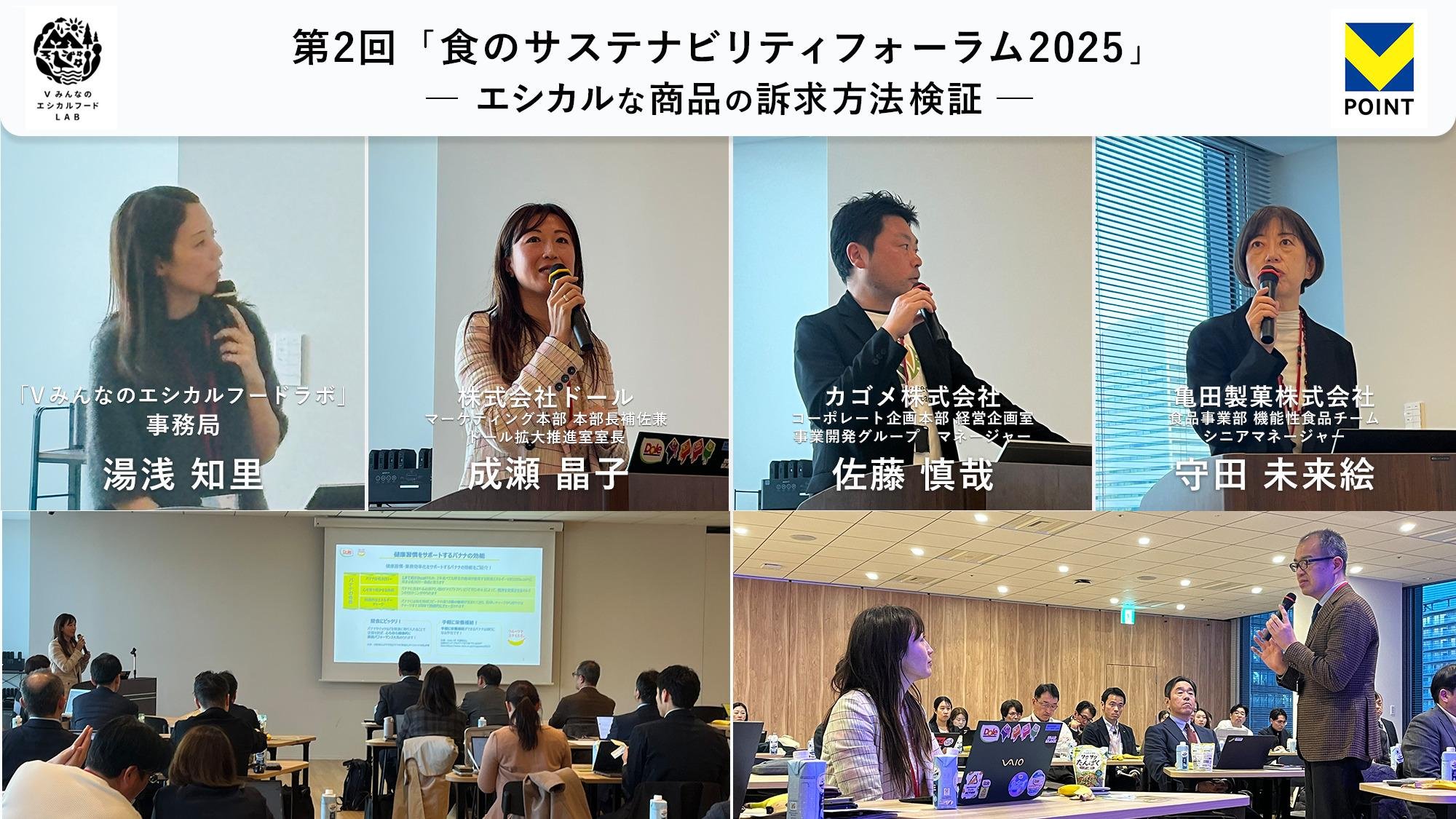
The "Food Sustainability Forum 2024," held four times last year, brought together stakeholders from across various industries and sectors. It became clear that Japanese consumers rarely choose ethical products solely based on their "social value," and that appealing to consumers by linking ethical products to the inherent value of the product itself—such as taste, enjoyment, quality, health, and brand recognition—is crucial for increasing their purchasing intent. Based on these findings, the "Food Sustainability Forum 2025" examined how to present ethical products in stores in a way that is perceived as valuable by consumers and leads to purchases, including product messaging.
Regarding the 2nd "Food Sustainability Forum 2025"
CCC MK HOLDINGS held its second "Food Sustainability Forum 2025" on Tuesday, March 17th. A total of 40 people participated from Axial Retailing Co., Ltd., AEON Retail Co., Ltd., S&B Foods Co., Ltd., Kagome Co., Ltd., Kameda Seika Co., Ltd., Kewpie Corporation, Kewpie Tamago Co., Ltd., Seven & i Holdings Co., Ltd., Seven-Eleven Japan Co., Ltd., TNC Corporation, Dole Ltd., Nichirei Foods Corporation, Nichirei Fresh Co., Ltd., Harashin Narus Operation Service Co., Ltd., Hitachi Solutions, Ltd., Mizkan Corporation, Meiji Holdings Co., Ltd., and United Supermarket Holdings Co., Ltd. (listed in alphabetical order).
Sharing of the results of our ethical product sales verification (excerpt)
"V Everyone's Ethical Food Lab" Secretariat
Chisato Yuasa
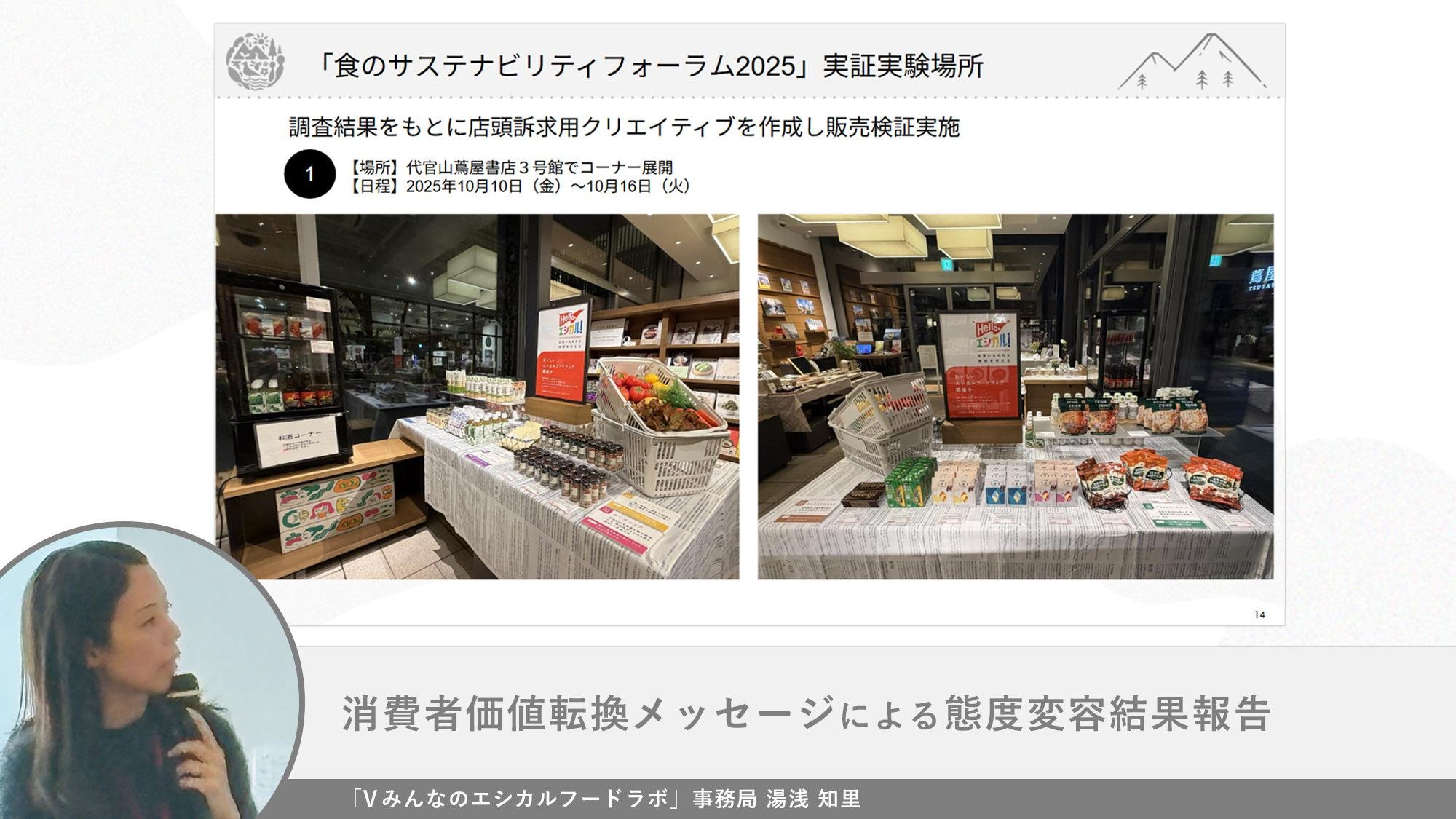
At the "Food Sustainability Forum 2025," in order to examine "how to promote ethical products in a way that transcends price differences and becomes consumer value," we collaborated with copywriters to develop multiple ethical category messages and product messages, and conducted research. As a result, we found that ethical value is more likely to translate into consumer value when it is linked to personal needs (the value of fulfilling the desire for security, satisfaction, and the joy of supporting ethical practices). Furthermore, it was found that women overwhelmingly tend to want to purchase products even if it means paying more than the price difference, and this tendency is also strong among young people in their teens and twenties.
In October 2025, we also set up an "Ethical Food Fair" corner at "Daikanyama TSUTAYA BOOKS" and "AEON STYLE Ariake Garden," using the product message that had the highest consumer value. We then surveyed approximately 150 people who actually viewed the corner about changes in their attitudes, including their awareness of ethical practices, their willingness to practice ethical practices, their favorability of the fair's featured products, and their purchase intentions.
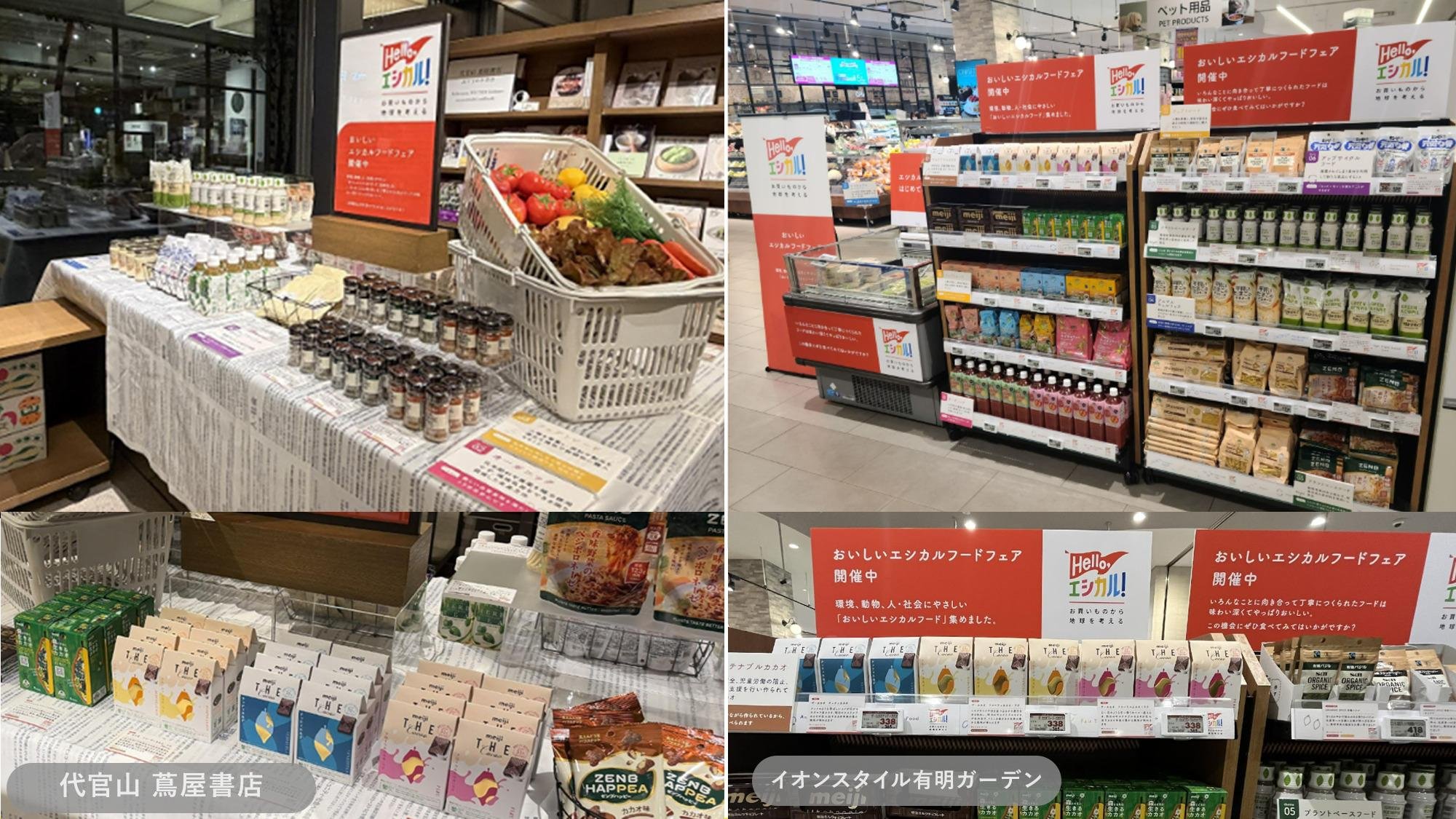
As a result, regarding the favorability of the products in question, 95.2% of respondents at Daikanyama TSUTAYA BOOKS and 82.8% at Aeon Style Ariake Garden said their favorability had "increased" or "slightly increased."Furthermore, regarding purchase intent for the target products, 91.5% of respondents in Daikanyama and 79.7% at Aeon Style said they "want to buy" or "somewhat want to buy."Furthermore, analysis of each product revealed that purchase intent was higher for products with a relatively high purchase frequency, such as sweets and salad dressings.
For this "Ethical Food Fair," we adopted and implemented messages that were deemed to have high consumer value based on the survey results. However, to clarify whether there was a difference when compared to messages that appealed to the ethical value itself, which had been used in product promotion in the past, we also conducted an online survey of approximately 2,000 people. A comparison of an appeal message (A) that transformed ethical value into consumer value and a straightforward appeal message (B) that simply highlighted ethical value revealed that (A) increased purchase intent for all products, and this trend was particularly pronounced among women aged 30 and over. On the other hand, among younger generations under 20, option (B) tended to increase their purchase intent.
In response to the question of how to promote ethical products in a way that outweighs the price difference, it was found that promoting ethical products in conjunction with a message that conveys high consumer value contributes to increased interest in, favorability towards, and willingness to purchase the product. On the other hand, among younger generations under 30, ethical practices themselves are likely perceived as a consumer value, so it is important to appeal to consumers with ethical considerations that take into account the gender and age group of the target market.
How to promote ethical products – Introducing the "Mottainai Fruit Project" (excerpt)
Assistant General Manager, Marketing Division, and Head of Dole Expansion Promotion Office, Dole Corporation
Akiko Naruse
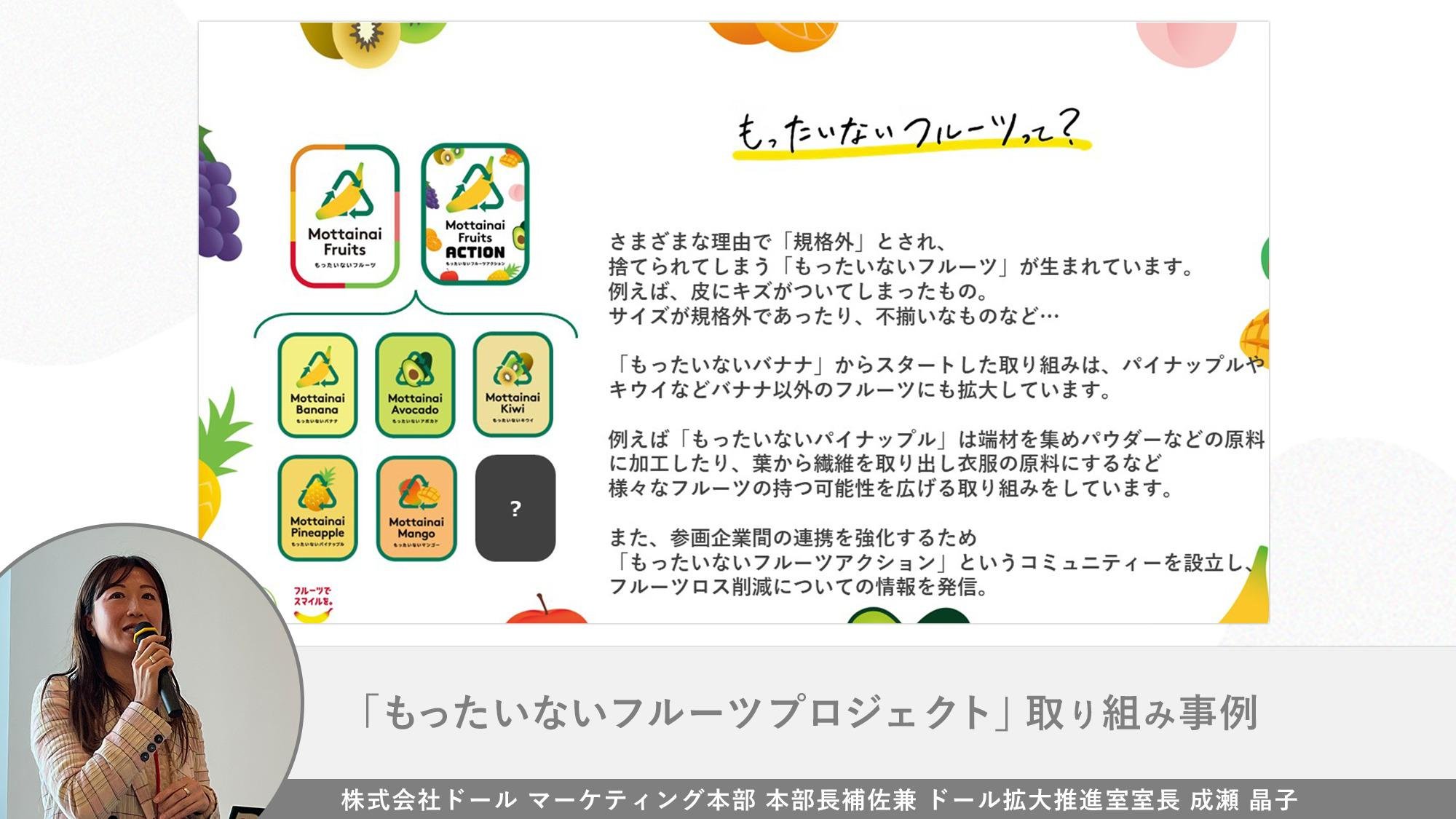
Dole Corporation produces and sells fresh produce such as bananas, pineapples, avocados, dragon fruit, and coconuts, primarily in Asian countries, as well as processed products such as canned goods, fruit cups, frozen fruit, and smoothie bowls. In recent years, the phrase "Bring smiles with fruit" has become popular. With the brand message "[...]", Dole is expanding its brand loyalty by increasing touchpoints through cross-merchandising and artist endorsements, and by generating buzz through package redesigns and the publication of "Fruit Smile Magazine".
Within this context, with the aim of establishing ethical brand recognition, we launched the "Mottainai Banana" initiative in September 2021. In the Philippines, a major banana-producing region that imports 1 million tons annually into Japan, chronic weather anomalies and persistent disease outbreaks are increasing various costs and threatening sustainable production. Therefore, we are making effective use of "waste bananas," which amount to 20,000 tons annually, as "Mottainai Bananas" (bananas that don't meet standard specifications). The lineup includes over 150 SKUs, including frozen banana slices and banana puree made from "Mottainai Bananas" (bananas that would otherwise go to waste), as well as banana charcoal for barbecues made from carbonized non-edible bananas, and products from participating companies. We are also implementing promotional measures such as offering free samples to young people who have a strong interest in the SDGs, and using a "store locator" function that allows users to easily search for stores that carry "Mottainai Bananas."In addition, we also offer "Office de Dole," a service that delivers "Mottainai Bananas" to offices.
By using "Office de Dole," companies can not only contribute to the SDGs but also support their employees' healthy habits as an employee benefit service. It has been adopted by IT companies, co-working spaces, food factories, logistics companies, and others. Currently, more than 200 companies are participating in the Mottainai Banana Project. As a result, it is expected that 4,000 tons of discarded bananas in Japan will be "rescued" by fiscal year 2025.
Furthermore, leveraging the platform cultivated through the "Mottainai Banana" initiative, we launched the collaborative fruit utilization project "Mottainai Fruit Action" in October 2024. By collaborating with more companies, we will explore new value for discarded fruits that are considered substandard, including not only bananas but also pineapples, avocados, kiwis, and domestically produced citrus fruits, and work to solve various problems related to them.
Our efforts toward plant-based foods – as a general incorporated association and a company – (excerpt)
Kagome Co., Ltd., Corporate Planning Division, Management Planning Office, Business Development Group, Manager
Shinya Sato
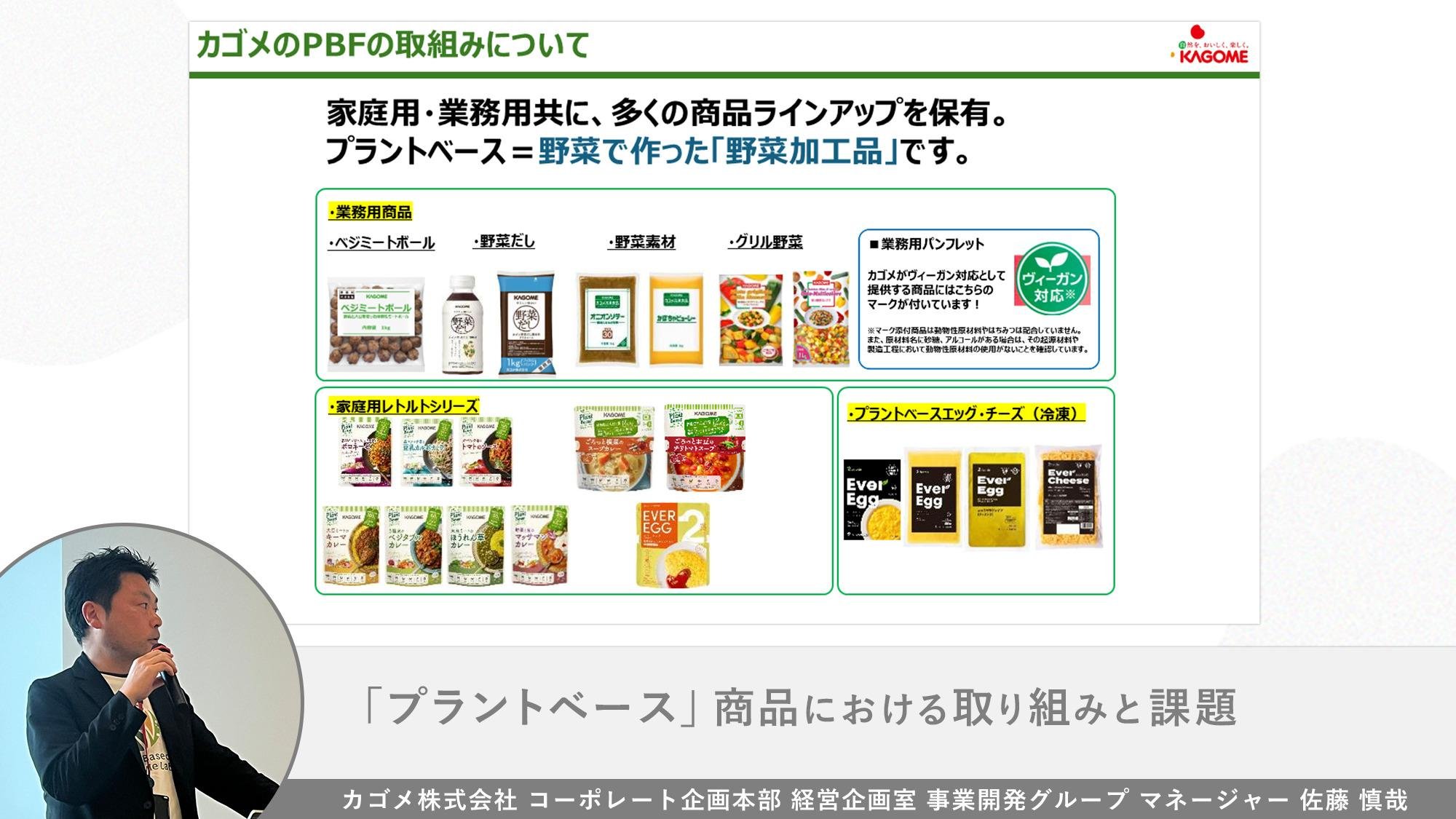
The Plant Based Lifestyle Lab (hereinafter referred to as "P-LAB"), a general incorporated association with over 50 participating companies including Kagome Co., Ltd., aims to promote "the health of the planet and its people" and "the sustainable development of society" through the widespread adoption of plant-based foods. Industry, academia, and government are collaborating and taking action to expand consumer awareness of plant-based foods and translate that awareness into actual purchases, through initiatives that transcend industry boundaries. Specifically, our activities include conducting annual surveys on awareness and actual practices regarding plant-based foods, offering samples at events, fostering networking and information exchange through exchange meetings for members, and exhibiting booths at various trade shows such as Tokyo Big Sight. Furthermore, in March 2025, we will establish Japan's first standard certification system for plant-based foods, strengthening our efforts to promote a plant-based lifestyle from Japan to the world.
Kagome Co., Ltd. supplies 25.3% of Japan's green and yellow vegetable consumption, and 60-70% of its products are plant-based. Amidst this, around 2019, when inbound tourism demand increased, we began offering vegan and vegetarian options to hotels and restaurants. The company's retort foods, such as pasta sauces and curries for commercial use, which are easy to serve to small groups, have been well-received. Since the COVID-19 pandemic, they have expanded their sales channels to include a series of retort foods for home use targeting domestic consumers. In addition, we have expanded our range of plant-based foods in Japan, including "Ever Egg," a plant-based egg developed in collaboration with the startup company TWO Co., Ltd., and "Vegetable Broth Seasoning," which is characterized by its complex and lingering umami flavor.
However, my honest impression is that the adoption of plant-based foods in Japan hasn't really spread much. According to P-LAB's research, while awareness has slightly increased to 30-40%, purchase intent is on a downward trend. Possible reasons for this include the recent rise in prices and the fact that Japanese food culture is already rich in plant-based ingredients like tofu. That is why we believe it is necessary to strengthen motivations for eating plant-based foods and to disseminate information about them, and we would like to promote discussions with many companies in the future to spread and develop plant-based foods.
Plant-Based Food Product Development Case Study: [Changes in Communication] (Partial Excerpt)
Kameda Seika Co., Ltd., Food Business Division, Functional Foods Team, Senior Manager
Mirai Morita
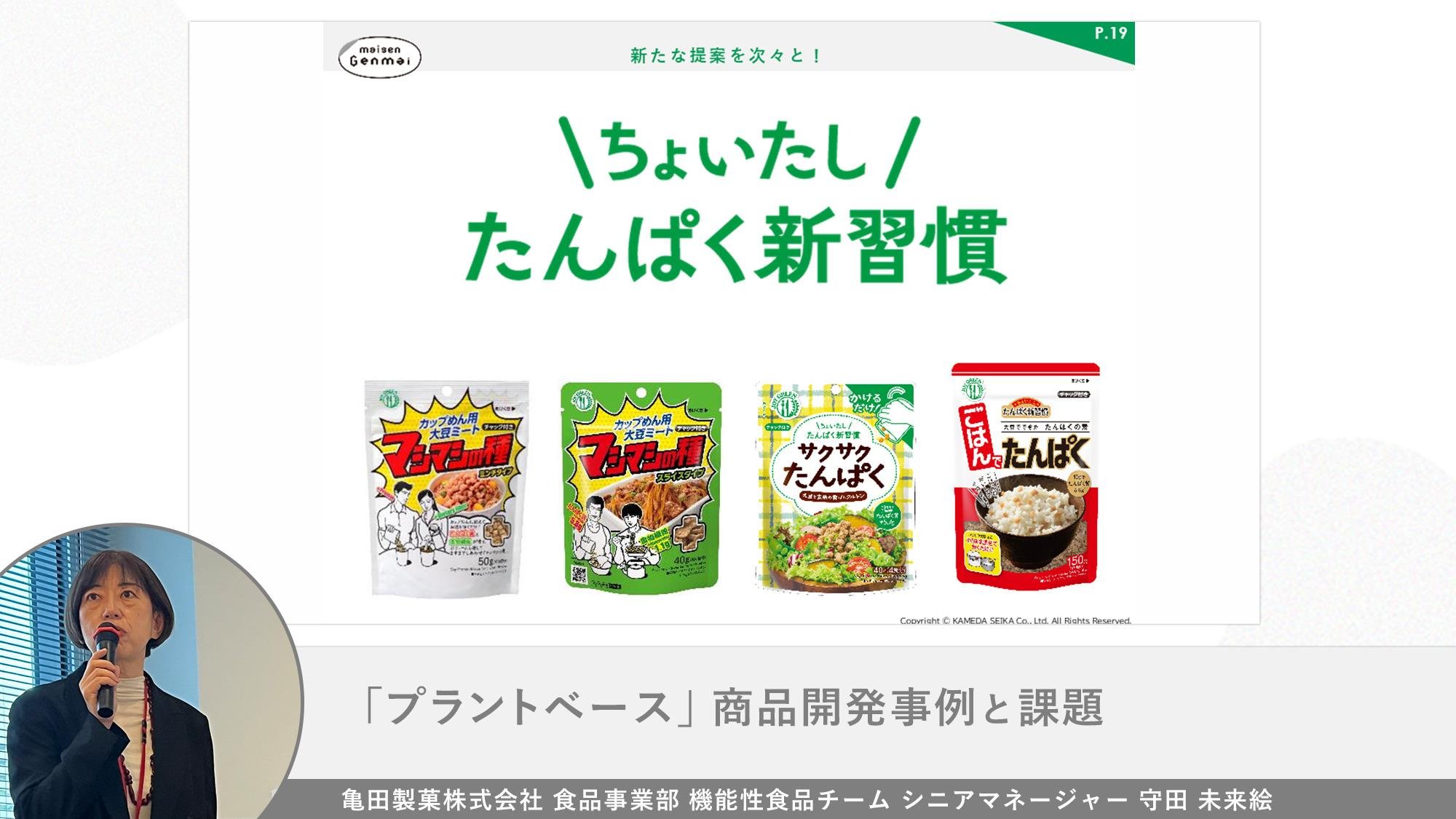
Kameda Seika Co., Ltd. acquired Meissen Fine Food in 2019 and manufactures plant-based foods primarily made from soybeans for both household and commercial use.
In 2020, the plant-based food market was projected to be on a growth trend, and survey results showed that about half of respondents intended to consume "alternative meat," indicating strong interest, particularly among women. Therefore, in 2023, they launched "Plant-Based Green Chicken."However, even after a year and a half on the market, sales did not increase. Furthermore, the alternative meat market has been shrinking since peaking at 4 billion yen in 2020, and the perception that "soy meat doesn't taste good" and "there's no need for alternative meat right now" has become firmly established. Therefore, we shifted the focus of our communication from "alternative meat" to "plant-based protein."With the Japanese public's desire to consume protein increasing year by year, we have focused on the health needs and launched a new product under the catchphrase "A little extra protein for a new habit."In March 2025, "Green Chicken" was relaunched as "SOY PROTEIN+", which provides protein, dietary fiber, and lactic acid bacteria all in one product. In addition, "Sakusaku Protein," which was developed with a focus on menus frequently consumed by Japanese people and can be eaten with salads, has received high praise from consumers, including 6th place in the processed foods category and the Trend Award at the Japan Access New Product Grand Prix Spring/Summer 2026, where general consumers make their selections.
In addition, our "Mashimashi no Tane" product, launched in the spring of 2025, which allows users to easily enjoy the nutrition and volume of soy meat simply by adding it to instant noodles, received a "highly attractive" response from approximately 90% of customers in our own survey. Among those responses, approximately 40% cited "the appeal of protein content" as the "most attractive reason."Furthermore, while conventional soy meat products are often sold in the dried produce section of stores, "Mashimashi no Tane" is sometimes sold alongside instant noodles, and we have seen cases where sales have exploded due to this new customer touchpoint that didn't exist before.
About the "Food Sustainability Forum 2026"
The "Food Sustainability Forum 2026" will be the phase of appealing to consumers. Leveraging the insights gained from previous forums, we plan to propose a lifestyle that incorporates ethical food by engaging in communication with a segment of the population that has a high affinity for ethical products over a set period of time. (Content is subject to change.)
CCC MK HOLDINGS, together with all stakeholders involved in "food," including consumers, manufacturers, and distributors, aims to promote the widespread adoption of ethical food in society and to contribute to creating a sustainable food cycle for the future through each and every activity of "V Minna no Ethical Food Lab."
Documents related to this matter
The co-creation platform "V Minna no Ethical Food Lab" held its second "Food Sustainability Forum 2025".Inquiries regarding this matter
CCC MK HOLDINGS Co., Ltd.
Business Public Relations Group TEL: 045-522-8174 / MAIL: cccmkpr@ccc.co.jp
If you resonate with the content of this site, please feel free to share it.


